Archaeological Museum of Corfu: What to See Inside
During our Corfu holiday, we went inside the Archaeological Museum of Corfu. After walking around the town, this was a chance to look at a much earlier part of the island’s story. The photographs here are from that visit: stone sculpture, pottery, bronze vessels and a few objects that deserve a closer look.
The museum is particularly worth considering if you enjoy ancient history. You do not need to recognise every style of pottery to get something from it. Start with the large sculptures, then slow down at the smaller displays that catch your eye.
This article contains an affiliate link. If you book through it, we may earn a commission at no extra cost to you.
At a glance
Details
Location
1 Armeni Vraila Street, Corfu Town
Full admission
€10; reduced admission €5 for eligible visitors
Time to allow
Our planning suggestion: 60–90 minutes, longer if you read every panel
Main highlight
The Gorgon pediment from the Temple of Artemis
Easy combination
A walk through Corfu Old Town and along the waterfront
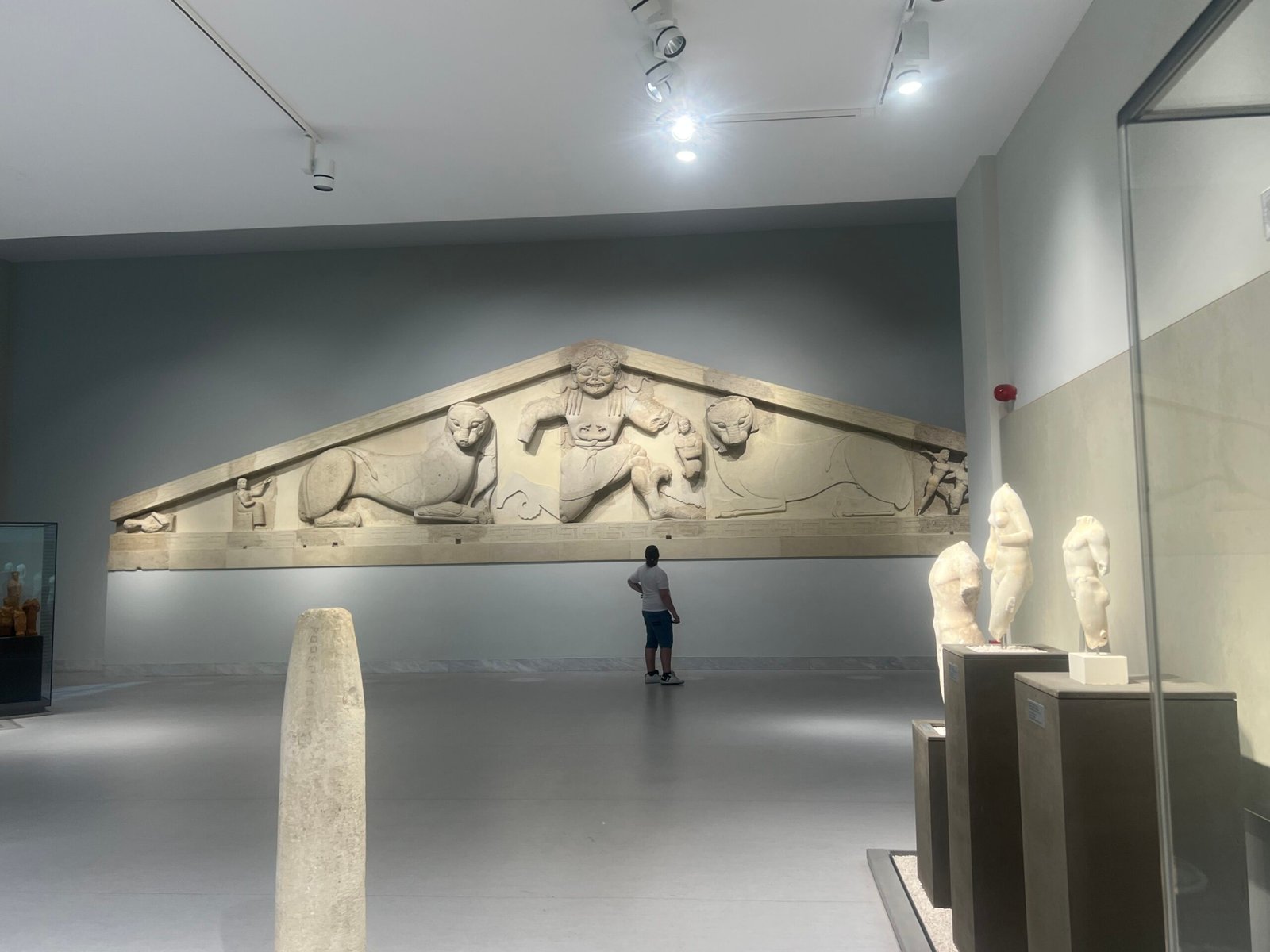
The Gorgon pediment displayed across the far wall of the museum gallery.
Finding the Archaeological Museum of Corfu
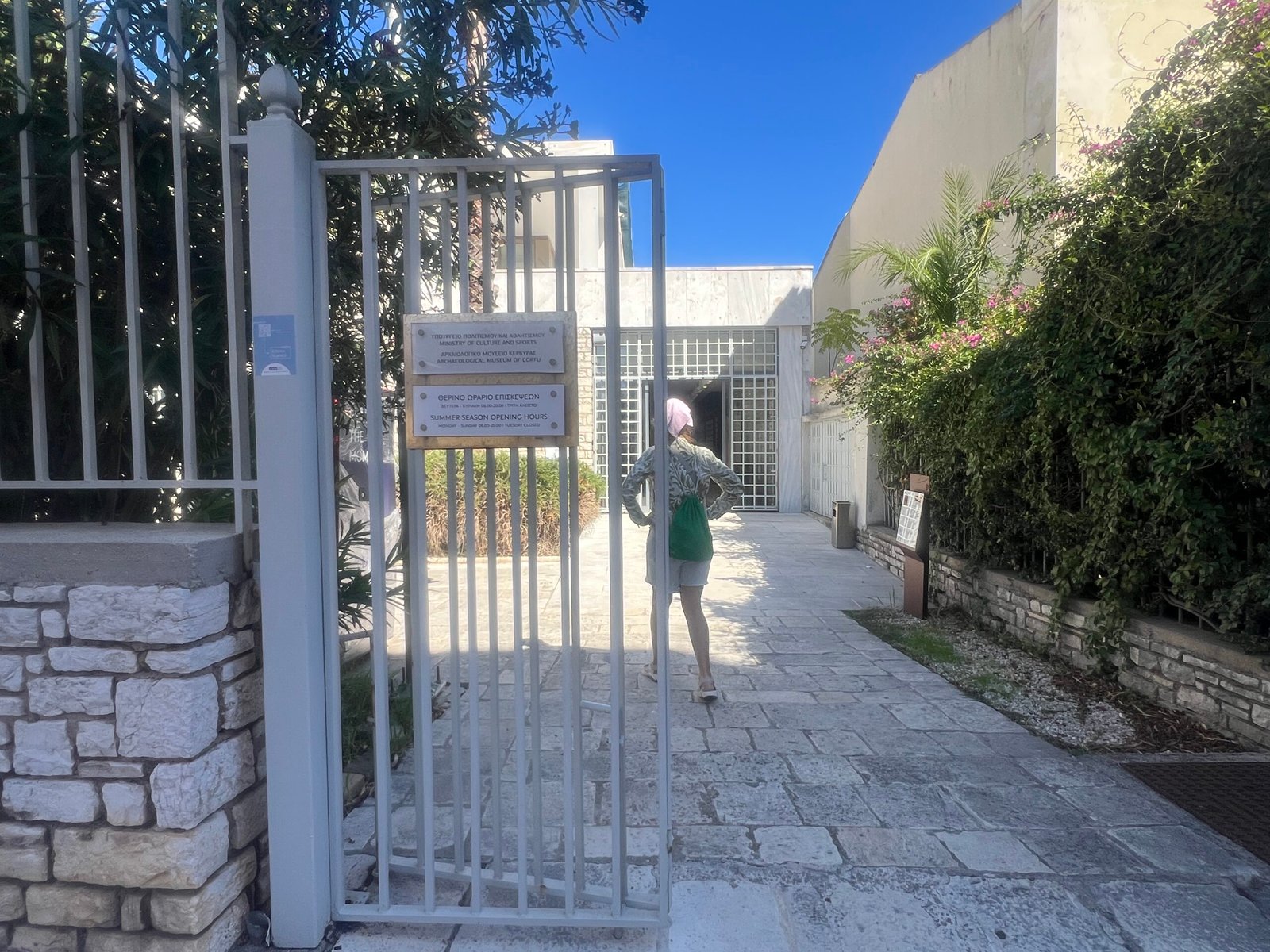
The entrance is on Armeni Vraila Street, south of the main old town streets. Our photograph shows the gate and the path towards the building. Look for the museum’s name at the entrance rather than expecting the grand frontage of a palace.
Hellenic Heritage places it around ten minutes on foot from Spianada Square. That makes it a manageable addition to a day in town, without needing to move the car between every stop.
The street entrance to the Archaeological Museum of Corfu.
The museum covers Corfu’s past from prehistory to Roman times. It opened in 1967 and reopened after renovation in 2018. Its modern galleries give large stone pieces room to stand apart, while smaller finds sit in glass cases.
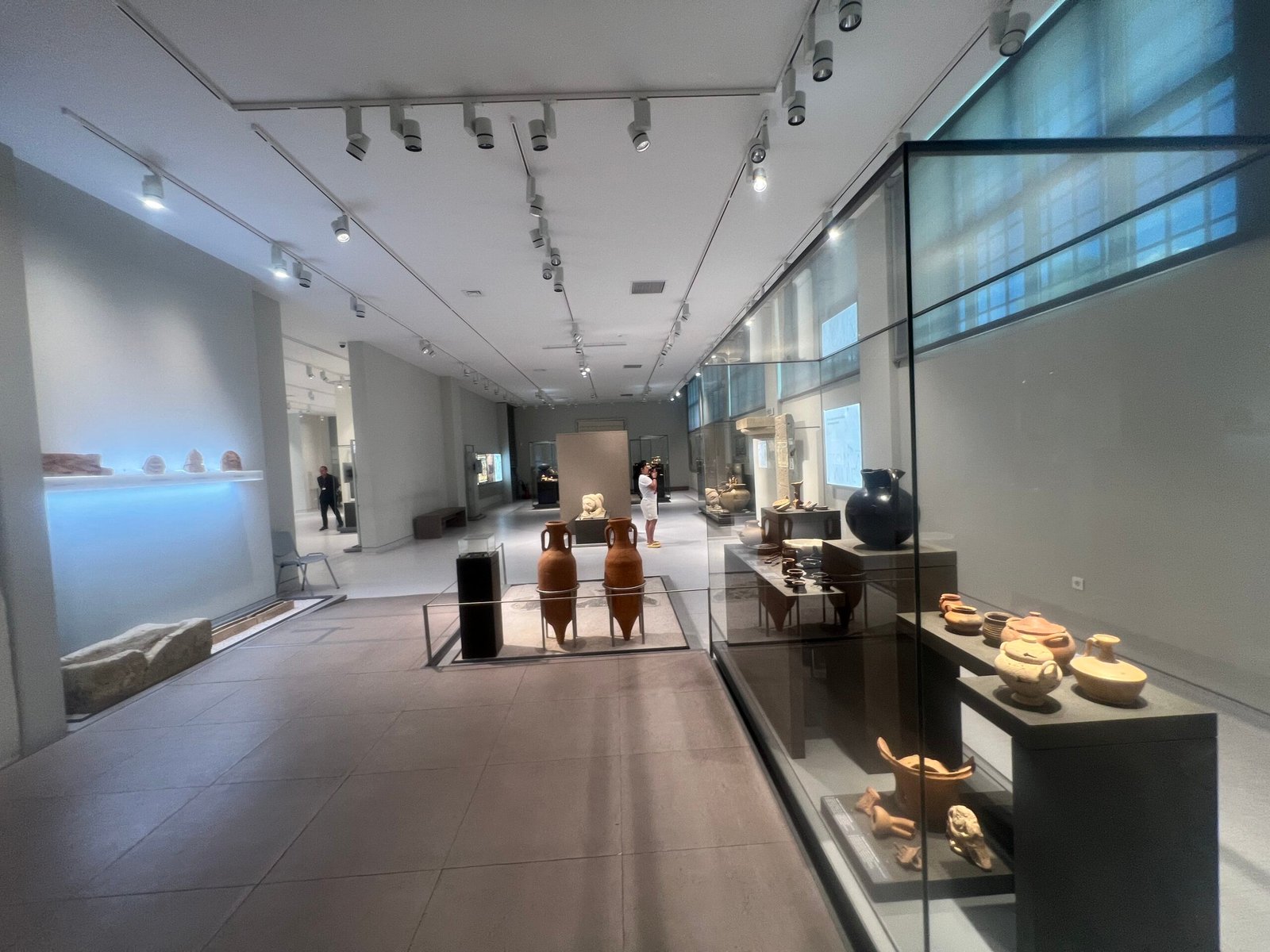
Our photographs show that change in scale well. In one room you are looking across an entire temple pediment; in another, you are close to small pottery fragments. It is worth doing both. A room photograph gives you the layout, but stepping nearer reveals the carving or the shape of a vessel.
A gallery with pottery cases and larger objects displayed separately.
The Gorgon Pediment from the Temple of Artemis
This is the museum’s most recognisable exhibit. A pediment is the triangular sculpted area beneath a temple’s roof. Here, the central Gorgon figure and the animals beside her fill a broad arrangement of surviving stone pieces.
The sculpture dates to around 580 BC and is described by the museum’s official visitor information as the oldest surviving stone pediment in ancient Greek architecture. It came from the Temple of Artemis in ancient Corfu.
Stand back first, then look at the central figure and the creatures around her. The visitor in our photograph helps show the scale. Even if you only want a short museum stop, leave enough time for this gallery instead of treating it as a quick photograph on the way through.
The Stone Lion
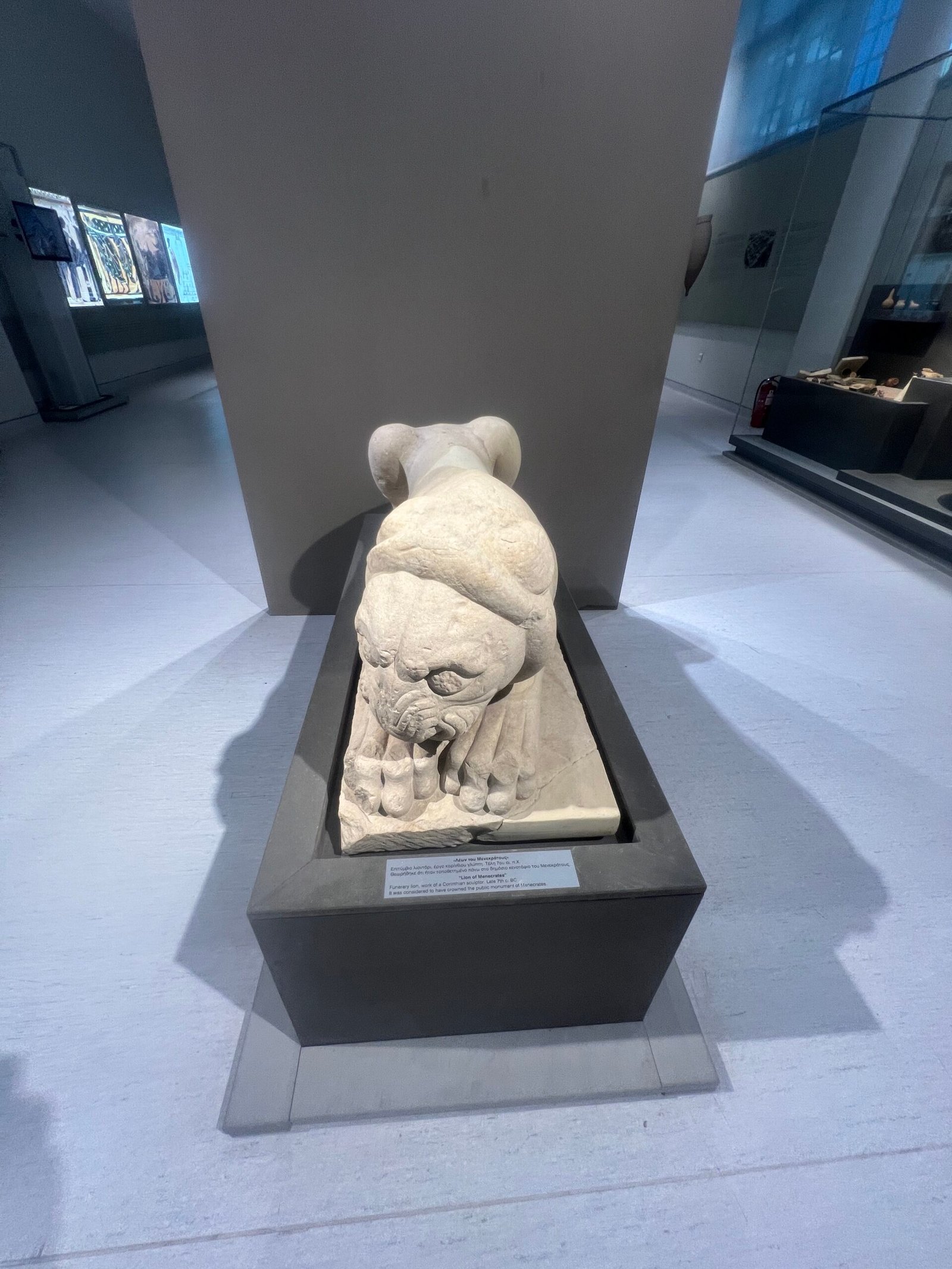
The stone lion is another piece to look for. Official museum information associates it with the funerary monument of Menekrates. Our photograph looks towards its face and front paws, with the rest of the body stretching behind.
It makes a useful contrast with the large pediment: an individual animal presented on its own plinth. You can see the worn surface and surviving carved details without the distraction of a crowded case.
The stone lion associated with the funerary monument of Menekrates.
A Pediment with a Dionysian Banquet
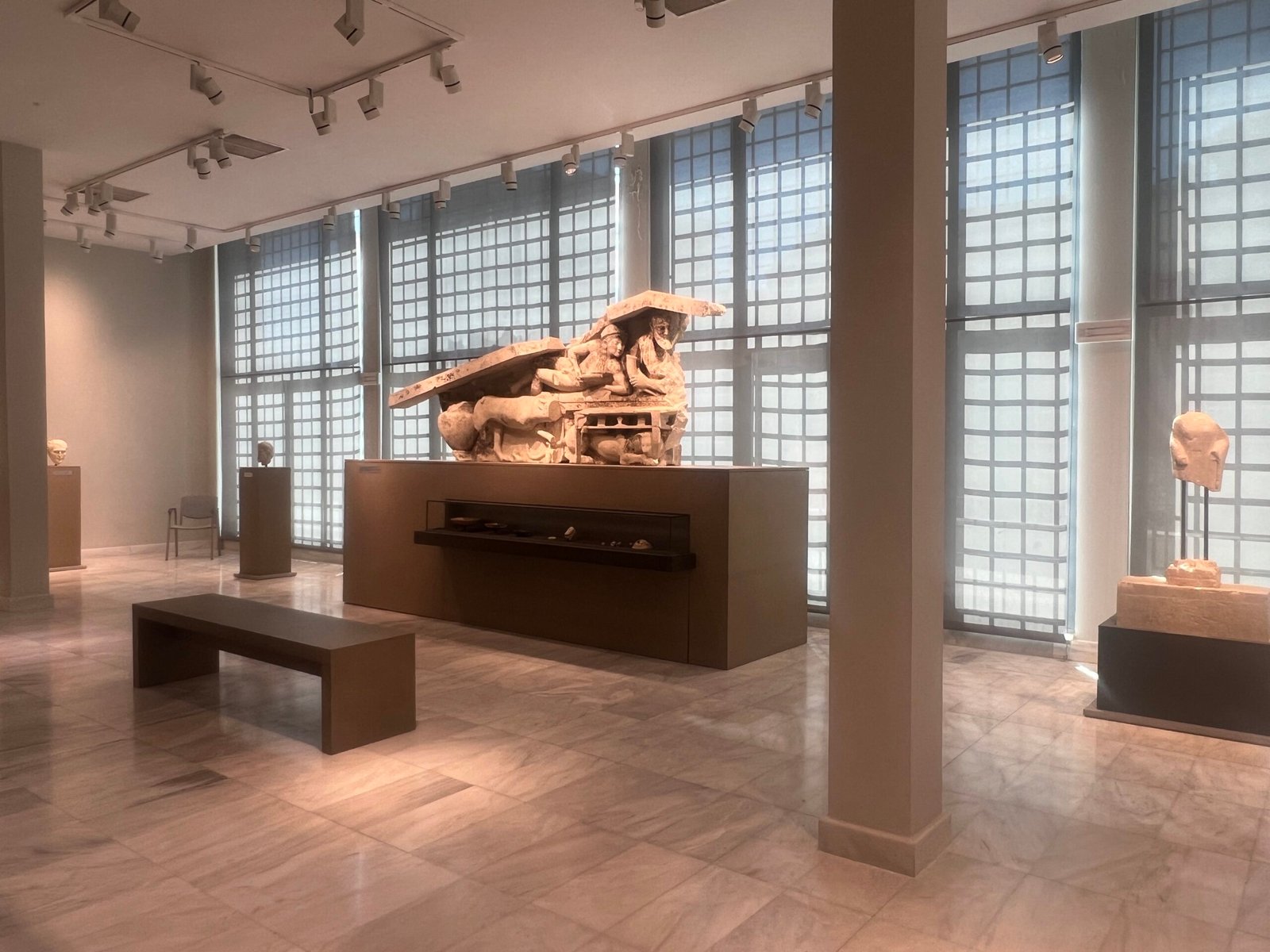
Another sculpted pediment shows a banquet associated with Dionysos. It dates to around 500 BC. In our photograph, the reclining figures and the surviving sloping edge make the original triangular shape easier to follow.
Take a moment to compare it with the Gorgon display. These are both pieces of temple sculpture, but the scenes have very different subjects. The photograph also shows the bench in front, useful if you want to sit and look rather than keep moving.
The surviving pediment with a Dionysian banquet scene.
Aphrodite and Eros
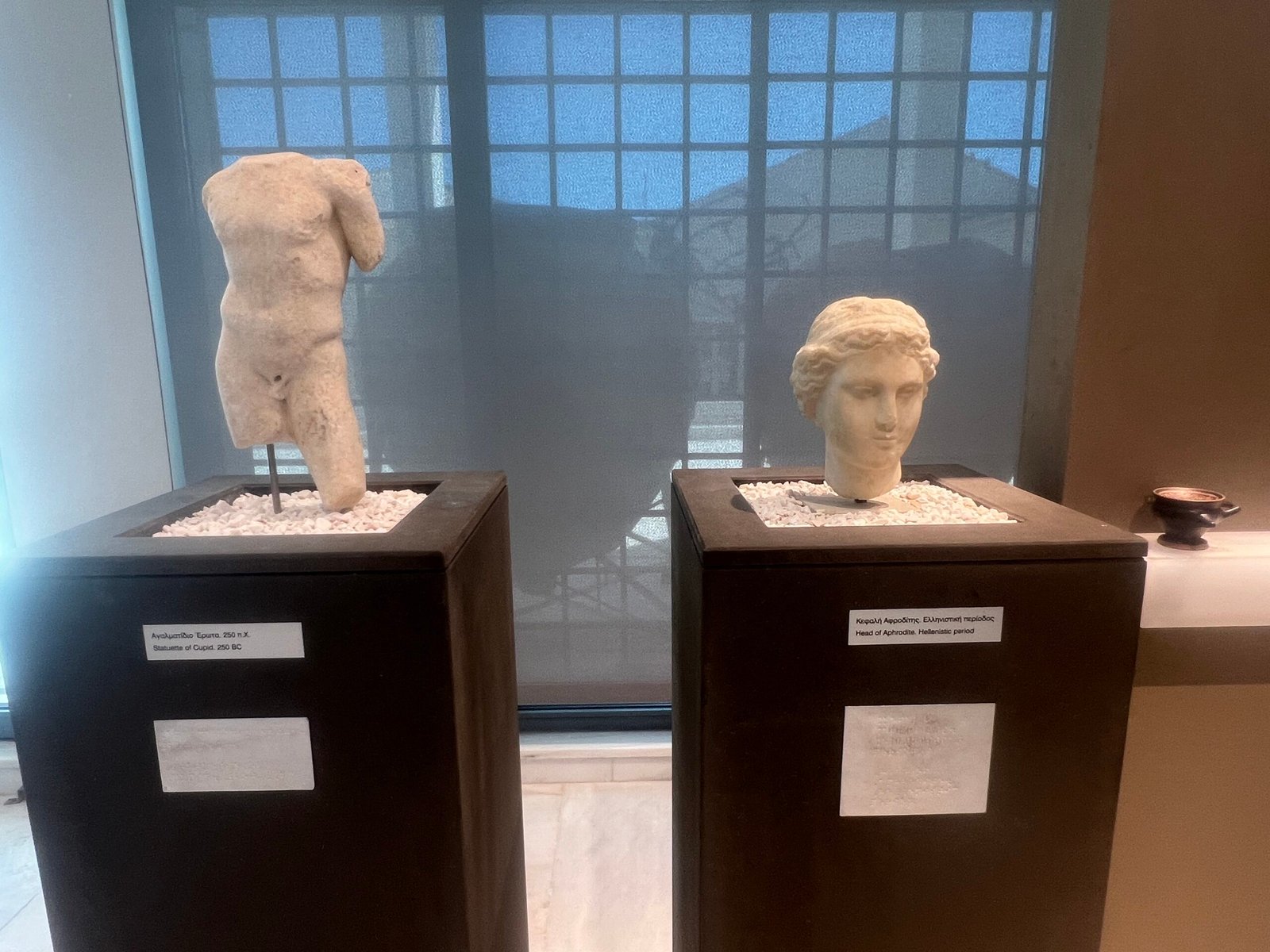
The labels in our photograph identify the marble head on the right as Aphrodite from the Hellenistic period. Beside it is a statuette of Cupid, or Eros, dated to 250 BC. Much of the statuette is missing, but the surviving torso is displayed upright so its form remains clear.
These smaller sculptures reward a closer look. Notice the hair and features of Aphrodite’s head, then compare the surface with the more heavily worn torso beside it. The English labels help distinguish the objects without having to guess from their appearance.
A statuette of Eros (Cupid), labelled 250 BC, beside a Hellenistic head of Aphrodite.
Bronze Urns and Pottery
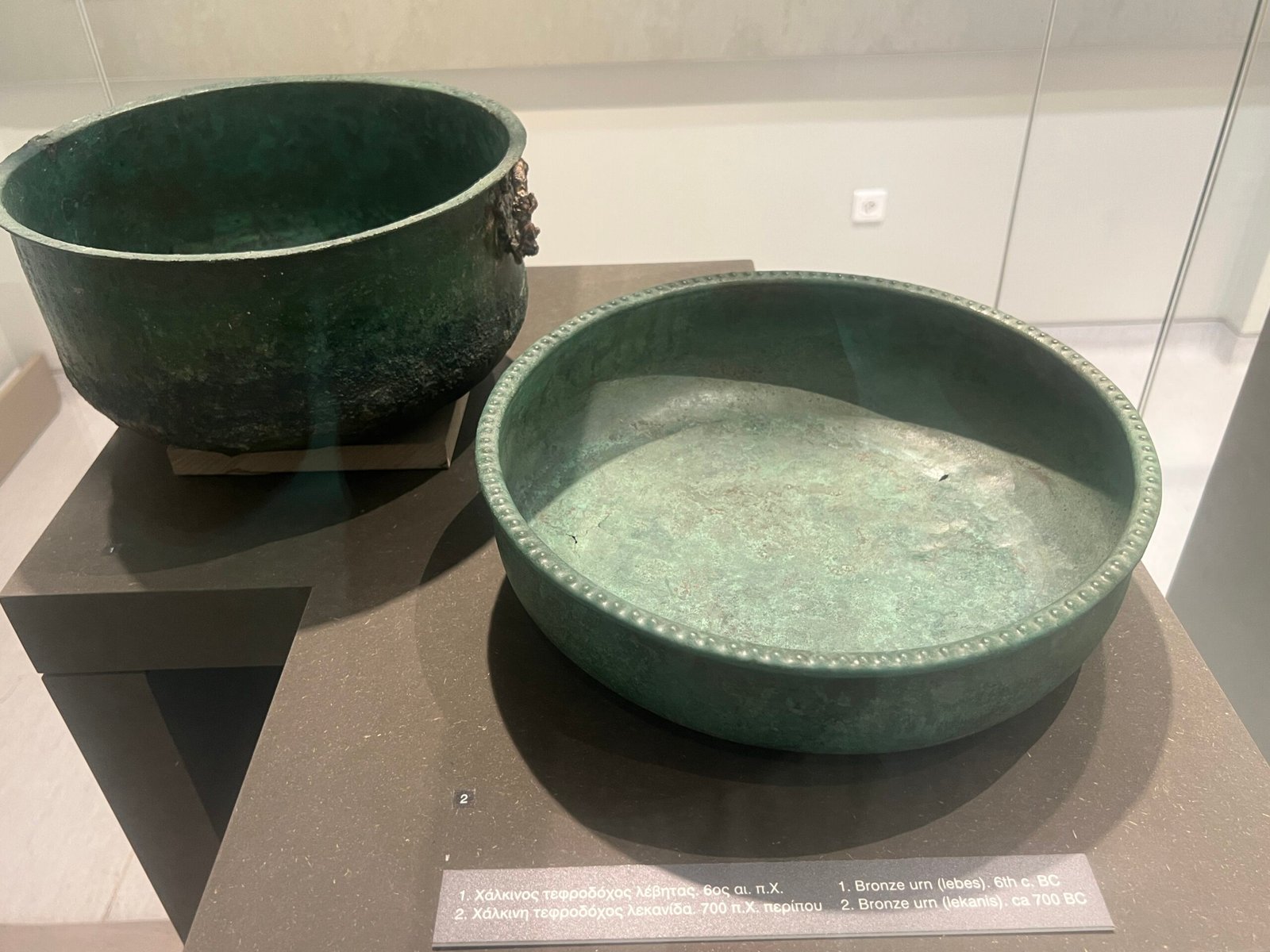
Two green bronze vessels in our photographs have particularly helpful labels. The deeper vessel is identified as a lebes urn from the sixth century BC. The shallower vessel is a lekanis urn dated to around 700 BC.
Bronze urns: a lebes from the sixth century BC and a lekanis dated around 700 BC.
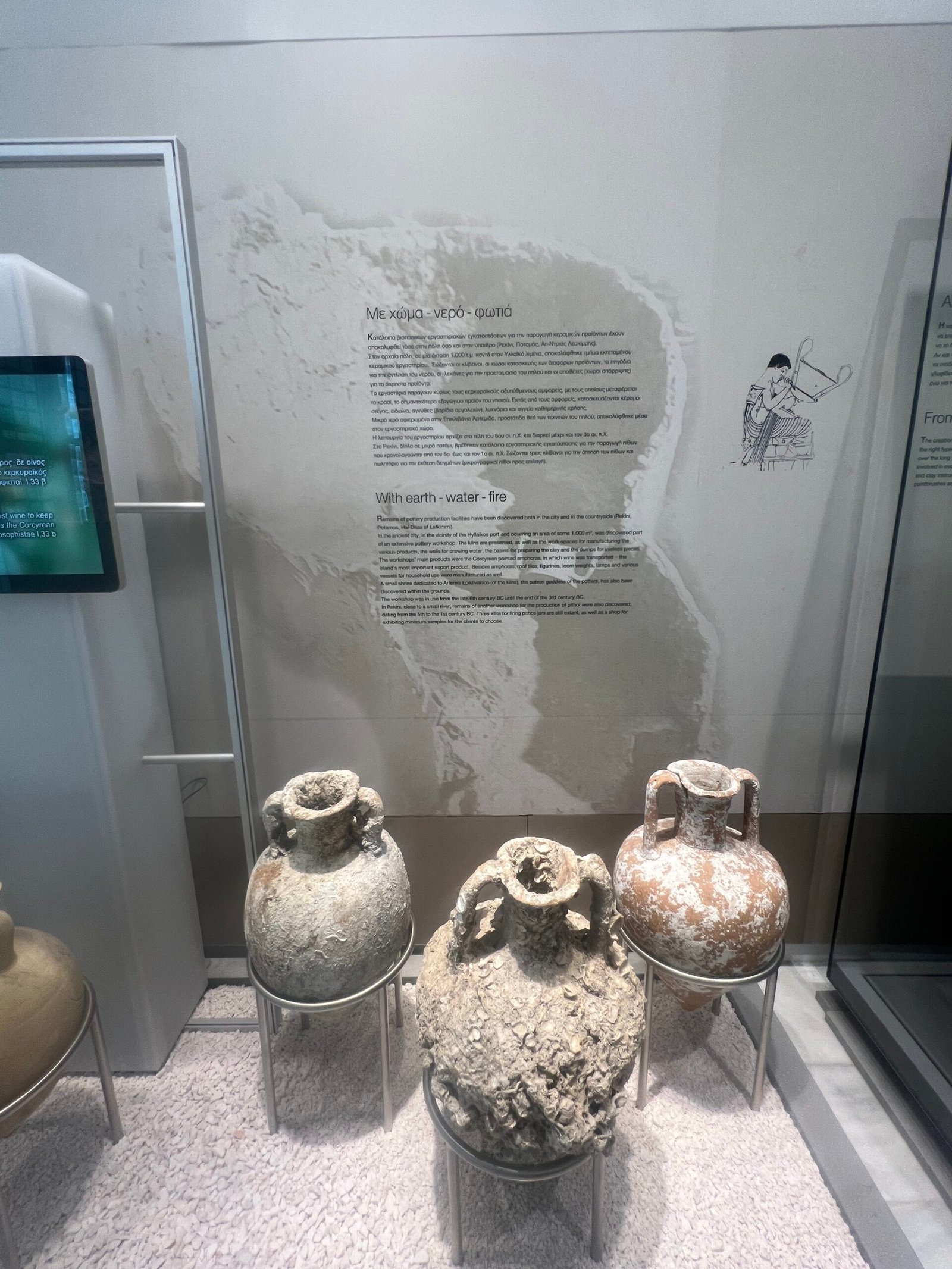
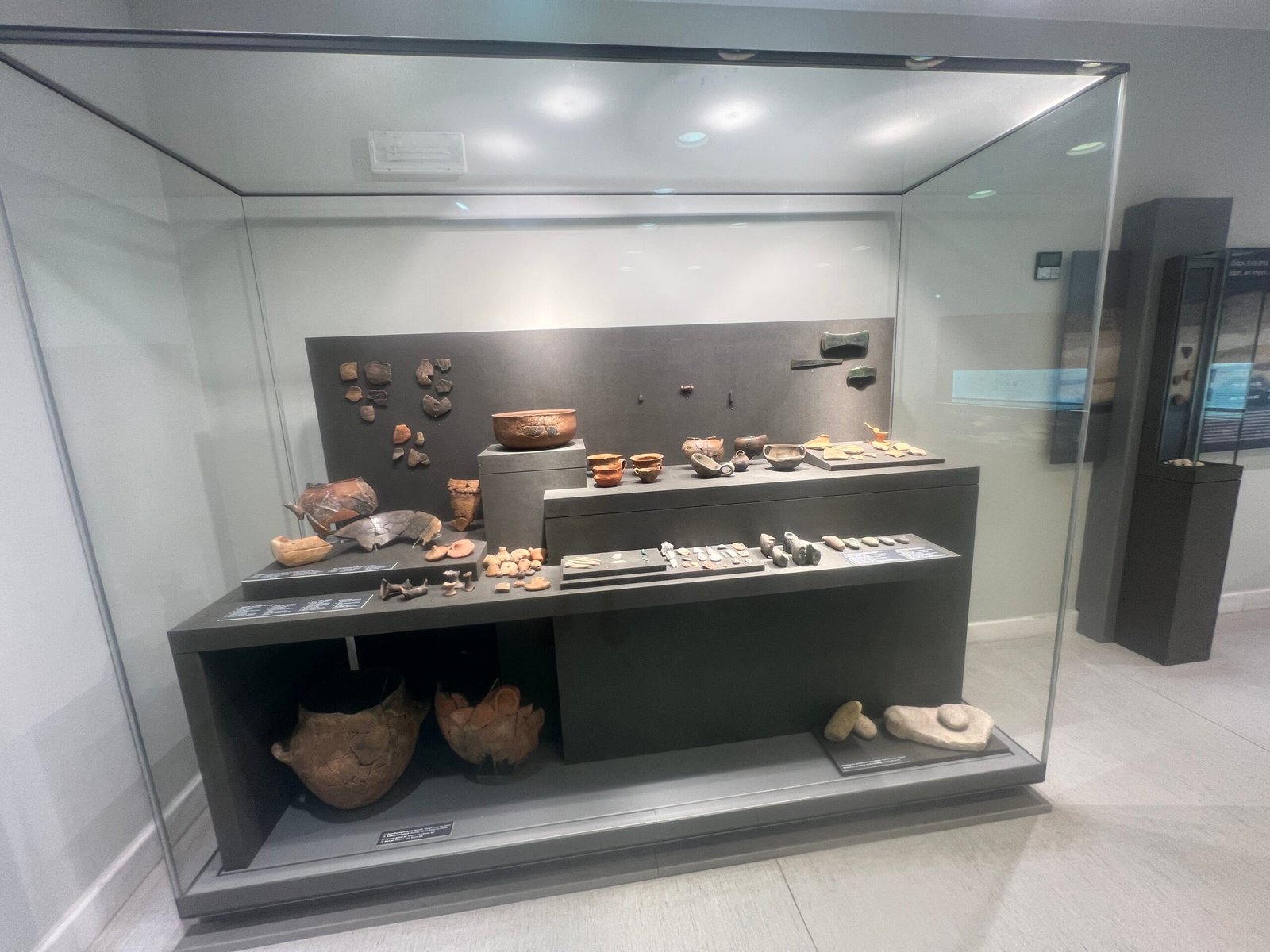
Elsewhere, the pottery display includes large two-handled vessels beside a panel about production. Their surfaces, handles and different shapes give you something tangible to compare. Rather than trying to remember every date, look at how one vessel differs from the next.
Large pottery vessels beside the display explaining pottery production.
A case containing pottery and smaller archaeological finds.
A Much Earlier Find: A Hippopotamus Jaw
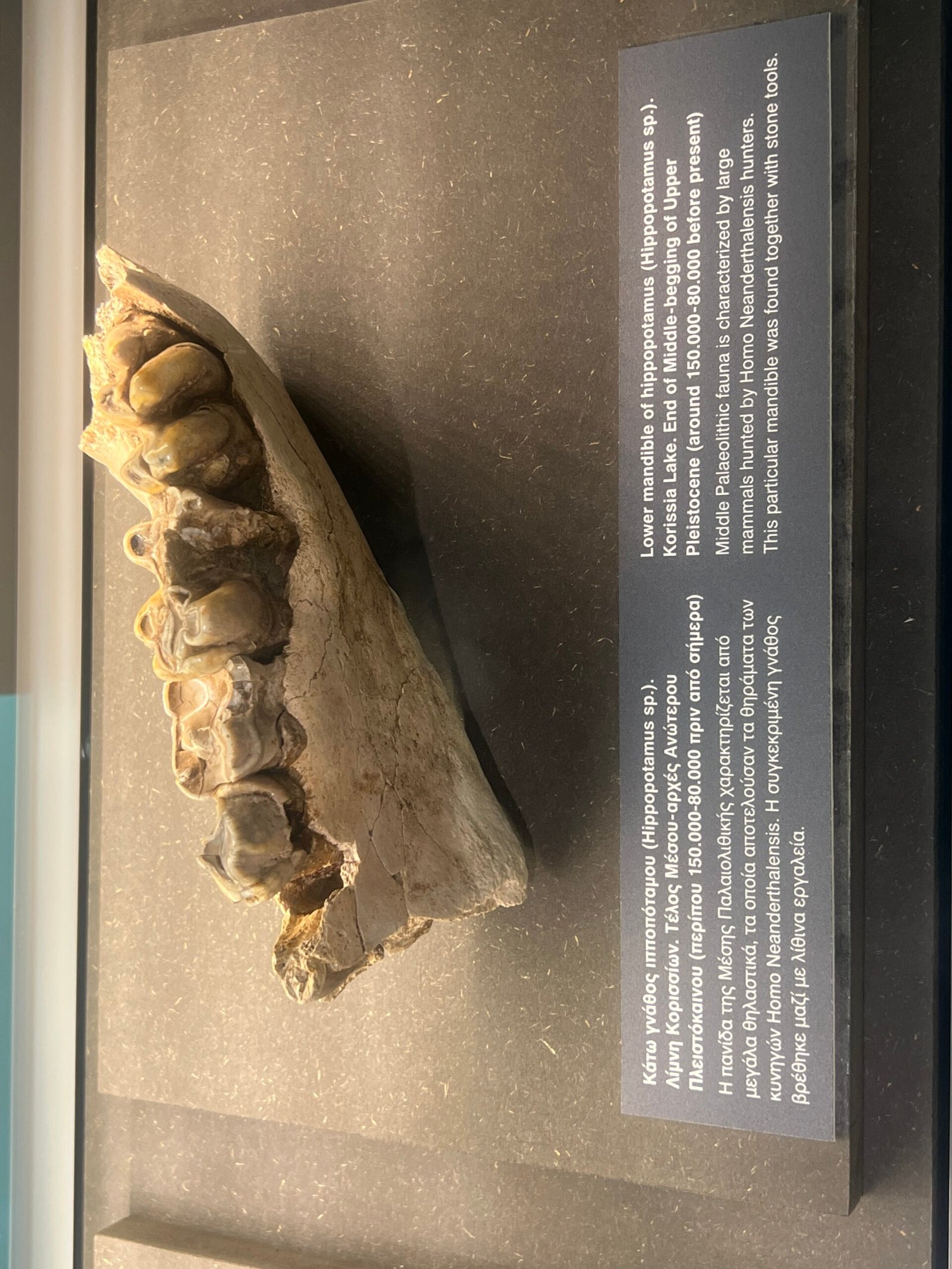
One of the more unexpected objects is a lower jaw from a hippopotamus. The label in our photograph places it at Korissia Lake and dates it to approximately 150,000–80,000 years before the present. It also records that the jaw was found with stone tools.
That is a very different timescale from the temple sculptures. It is a good reason to give the prehistoric section some attention instead of heading straight for the museum’s best-known exhibit.
Hippopotamus lower jaw from Korissia Lake, with the museum’s explanatory label.
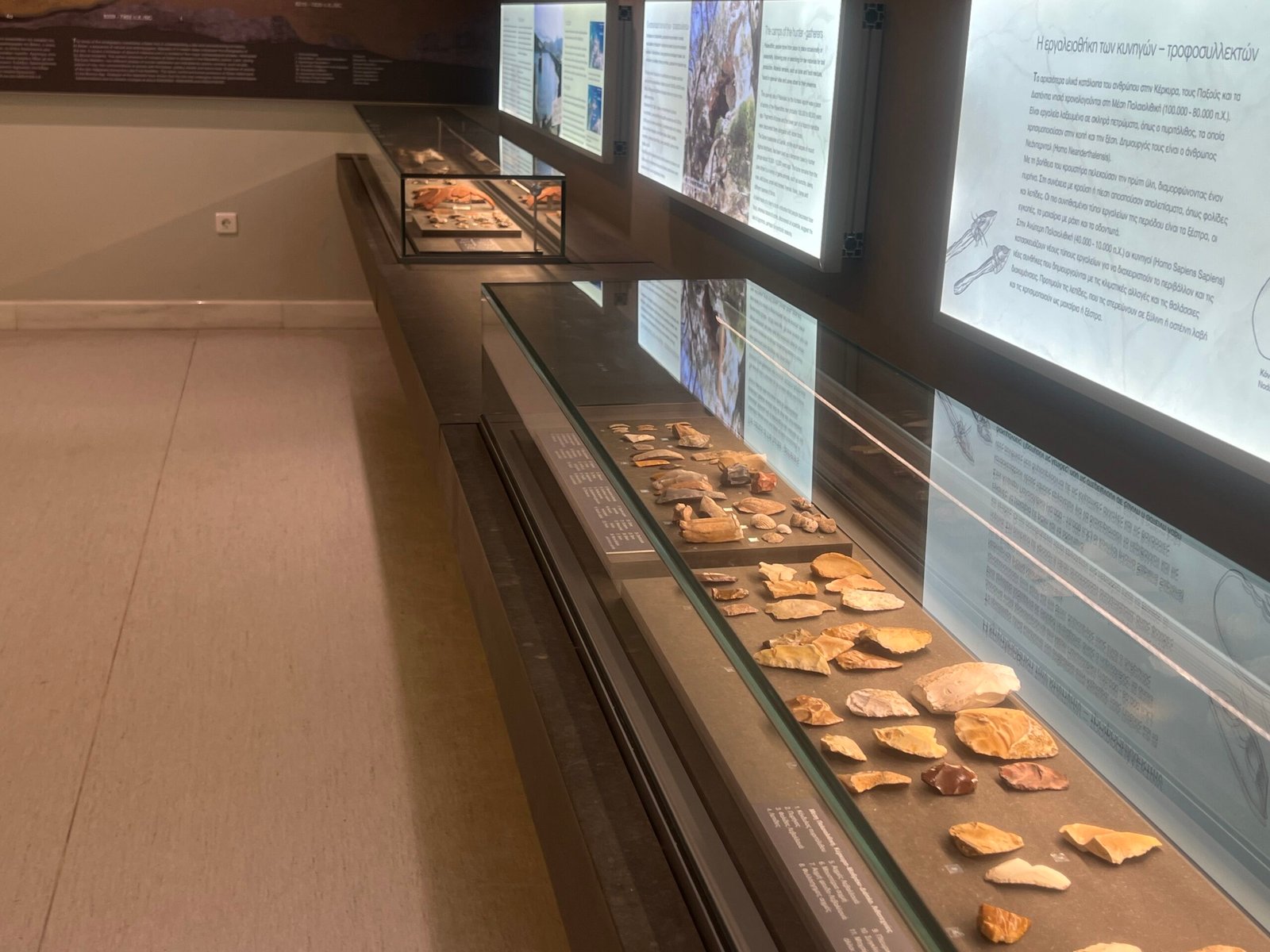
Smaller finds arranged beneath the prehistoric exhibition panels.
Tickets and Opening Hours
The official listing checked on 4 October 2026 gives full admission as €10 and reduced admission as €5. Check eligibility before choosing a reduced ticket. For current prices and booking, use the Hellenic Heritage museum page.
Season
Published hours
1 April–31 October
08:00–20:00; Tuesday closed
1 November–31 March
08:30–15:30; Tuesday and Thursday closed on the current official listing
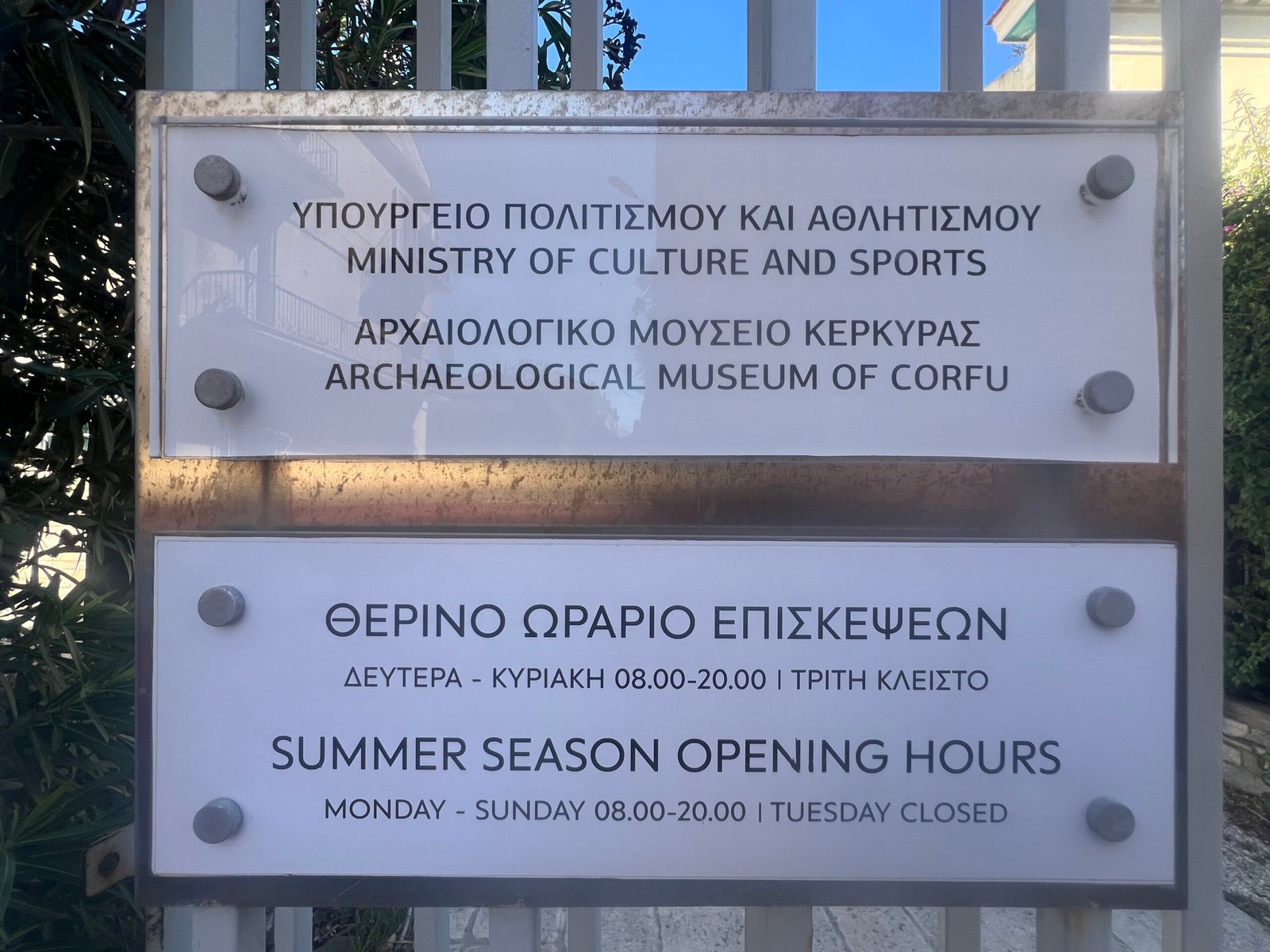
Last admission is listed as twenty minutes before closing. Recheck the timetable for your date, particularly in winter or around public holidays. The sign we photographed confirms the summer timetable, but a photograph cannot tell you about later changes.
The entrance sign showing summer hours of 08:00–20:00, with Tuesday closed.
How to Fit the Museum into Your Corfu Day
For a couple visiting at an easy pace, we would allow an hour to an hour and a half. That is a planning suggestion, not a record of how long our own visit took. If you enjoy reading exhibition panels, leave a wider gap before your next booking.
A simple plan is to visit the museum, walk towards Spianada, then continue into the old town for food or coffee. If you are already staying centrally, walking avoids having to find another parking space. If you are driving from elsewhere on the island, plan where to leave the car before reaching the narrower central streets.
For a wider island itinerary, you can compare car-hire options through DiscoverCars. Check the collection point, fuel policy and cover details before booking.
We would put it on the list for visitors who want to understand something of ancient Corfu alongside the town’s streets and fortresses. The large sculpture gives you a clear starting point, while the smaller cases offer plenty to explore afterwards.
What works well
Several distinctive sculptures make the visit easy to focus.
The photographed labels include English explanations.
Its location makes it straightforward to combine with a walk in town.
What to plan around
The collection is focused on archaeology; it may appeal less if ancient history is not your interest.
Reading the smaller displays takes time.
Opening days need checking before you set off.
Frequently Asked Questions
What is the main exhibit?
The monumental Gorgon pediment from the Temple of Artemis is the museum’s best-known piece.
Is this the Museum of Asian Art?
No. The Museum of Asian Art is in the Palace of Saint Michael and Saint George. The Archaeological Museum is on Armeni Vraila Street.
Can you walk there from the old town?
Yes. The official visitor page gives a walk of around ten minutes from Spianada Square.
Are there facilities for visitors with limited mobility?
The official listing includes an elevator and accessibility facilities. Contact the museum on +30 26610 30680 for any specific access requirements.
Where should you check tickets?
Use the Hellenic Heritage museum page for current admission information and its official booking link.
Visitor Information and Sources
Practical information checked on 4 October 2026. Exhibit identifications also use the labels visible in our own photographs.