Paleokastritsa Monastery: Our Visit Above Corfu’s Blue Bays
Paleokastritsa Monastery brings together several sides of Corfu in one stop: a flower-filled courtyard, an ornate Orthodox church, a small museum and open views across the Ionian Sea. During our visit, we photographed both the details inside and the landscape around it. The sea, beach and green hills deserve space in the story just as much as the buildings.
If you are deciding whether to go up from the waterfront, allow time to explore rather than stopping only for a panorama. The museum’s old manuscripts are particularly interesting, and the church looks very different from the sunlit paths outside. This guide follows those parts of our visit, with practical suggestions for planning your own.
This article contains affiliate links to DiscoverCars and GetYourGuide. If you book through them, we may earn a commission at no extra cost to you.
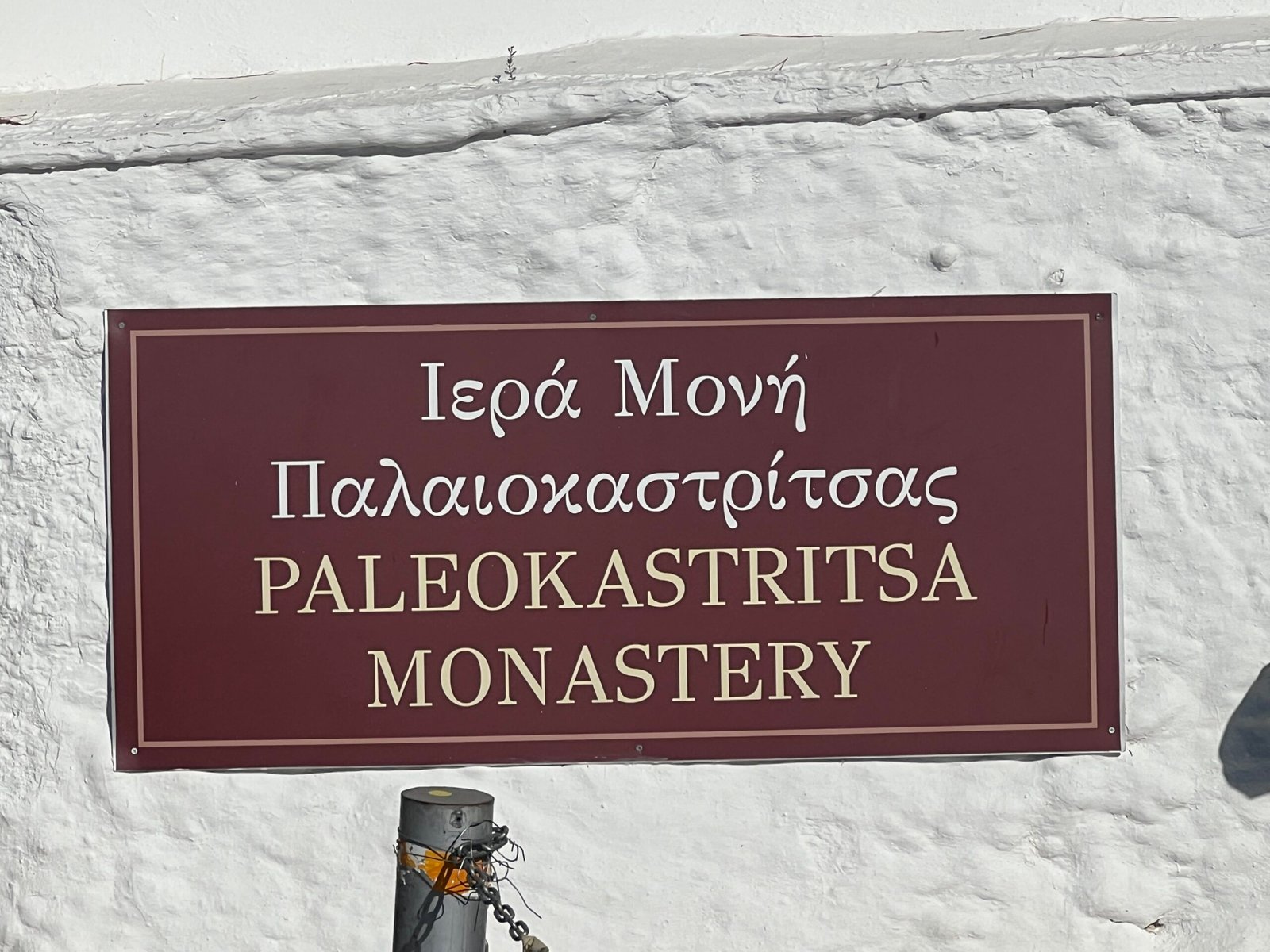
The sign at the entrance to Paleokastritsa Monastery.
At a glance
What to know
Place
Paleokastritsa Monastery, also called the Monastery of the Theotokos
Setting
A headland above the bays of Paleokastritsa, on Corfu’s west coast
Highlights
Church, courtyard, museum manuscripts and sea views
Time to allow
Our planning suggestion: 45–75 minutes, with extra time for the beach
What to wear
Clothing covering shoulders and legs, following the entrance notice
Before you go
Check the current visiting hours and any midday closure
Where Is Paleokastritsa Monastery?
The monastery stands above the coastal resort of Paleokastritsa. On maps, the place may also appear as Palaiokastritsa, while the monastery is sometimes listed as Moni Theotokou. These names refer to the same destination, so check the location rather than worrying about small differences in spelling.
Its position explains much of its appeal. Below are beaches and boats; around the headland are rocky edges and open water. Coming up to the monastery gives you a different perspective on a place you might otherwise experience mainly from the shore.
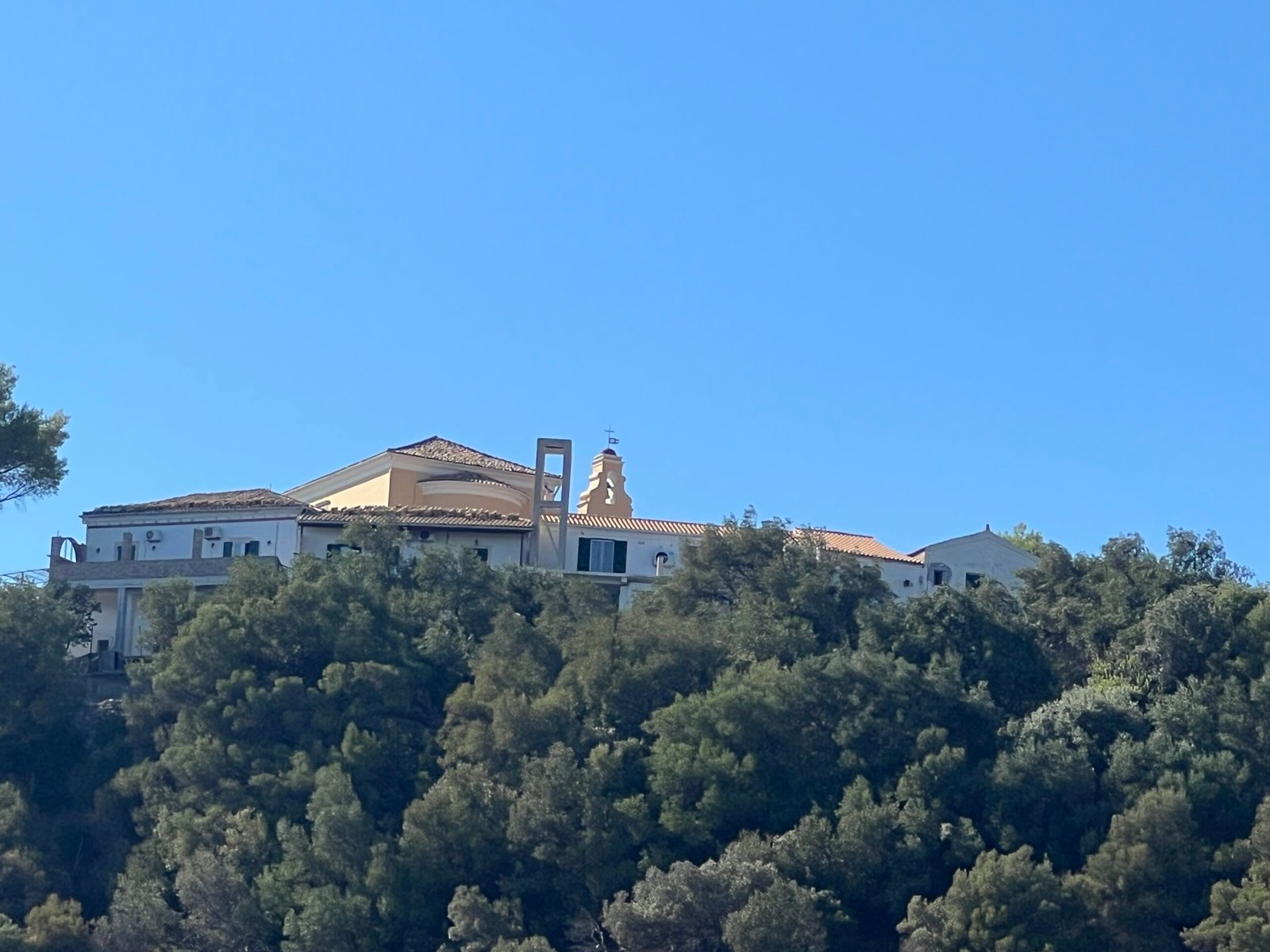
Paleokastritsa Monastery on the wooded hill, photographed from our boat.
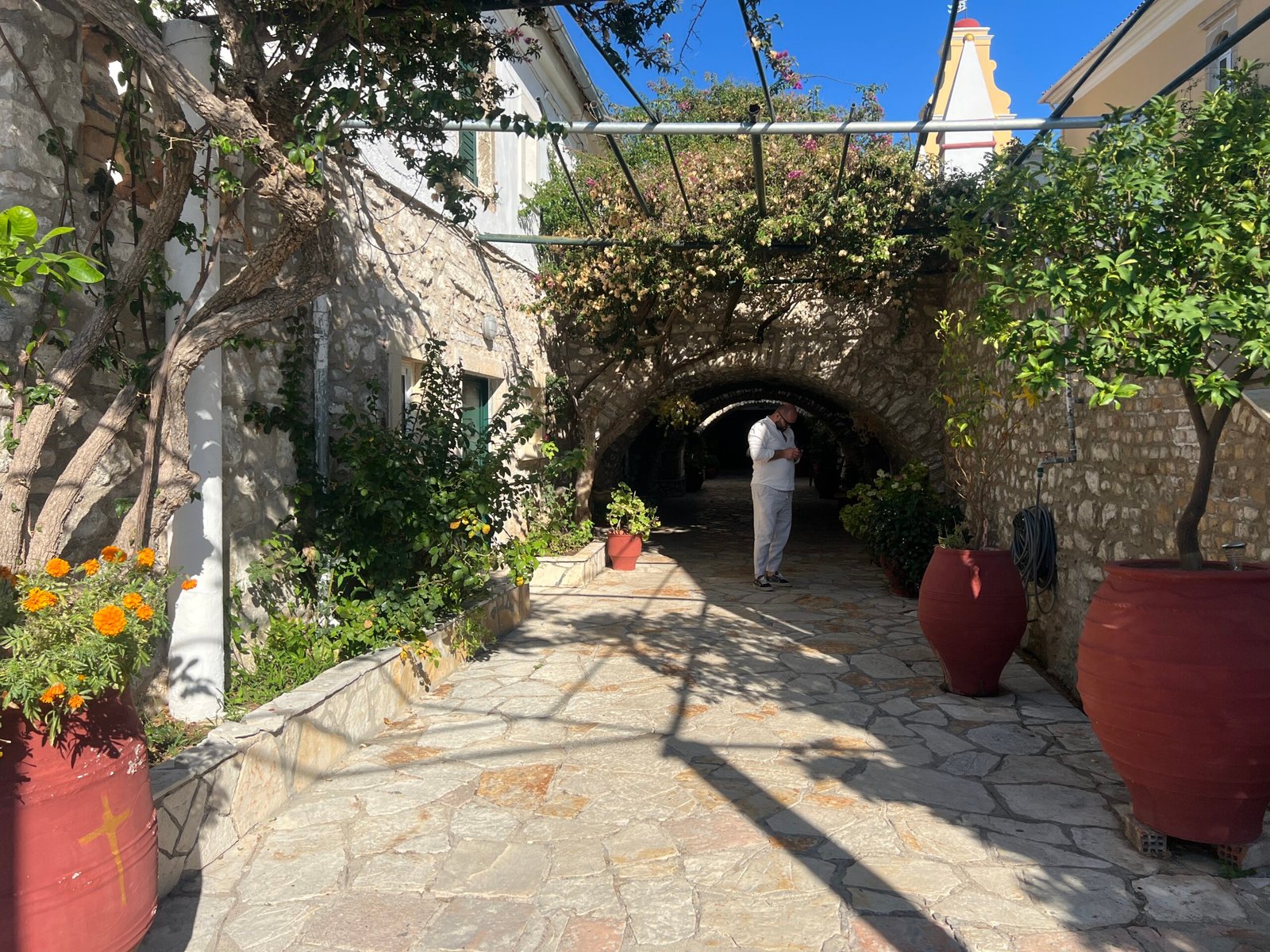
The stone approach, with plants and a visitor beneath the arch.
If your holiday also includes time in the island’s capital, give the monastery its own coastal outing. It offers a useful change of scene from the old town’s streets, fortresses and waterfront.
The monastery is dedicated to the Virgin Mary. The name Theotokos is an Orthodox title for Mary, commonly translated as Mother of God. It remains a religious place, so the church and courtyard should be treated with the same respect as any place of worship.
The history is less simple than a single founding date. Corfu Port Authority explains that an inscription at the gate gives 1228, while historical research places its foundation in the middle of the fifteenth century. We would therefore describe 1228 as the traditional date, rather than claiming that every building visible today has stood here unchanged since then.
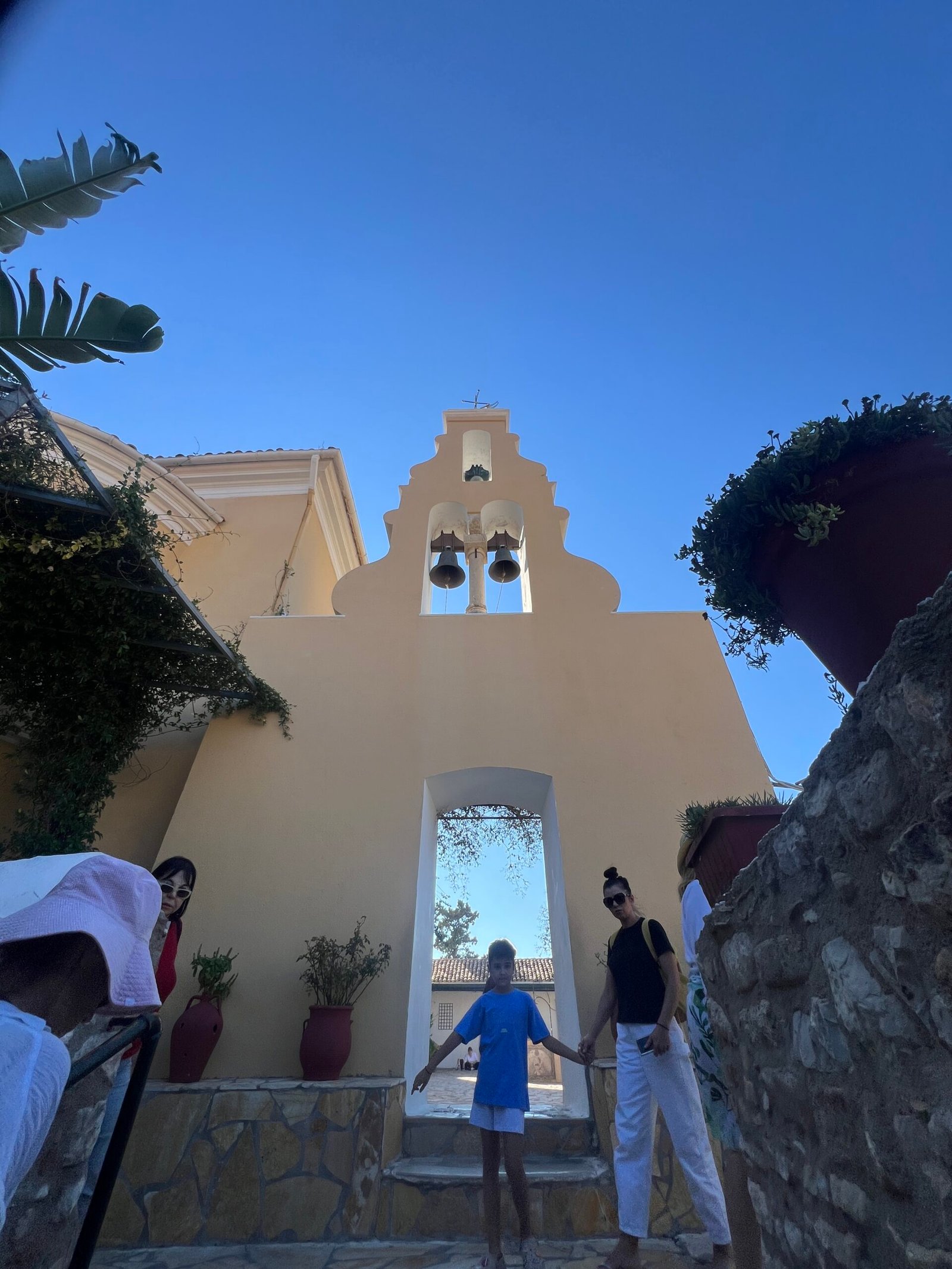
The bell opening above a passage through the monastery buildings.
The Courtyard and Garden Paths
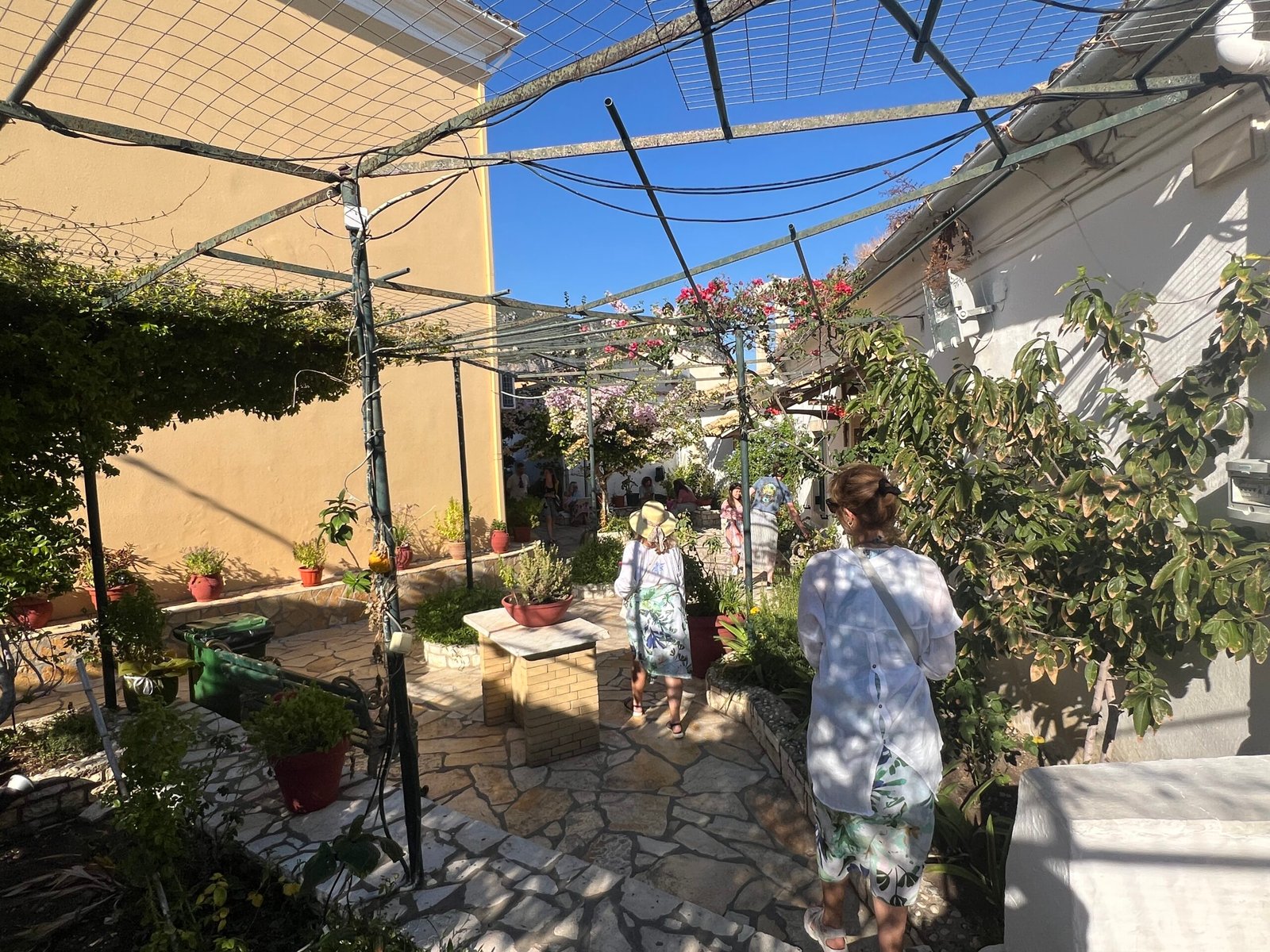
The courtyard is a good place to begin. Our photographs show stone paving, pale walls, large terracotta pots and plants growing over the framework above the path. There are people moving between the buildings, which gives the photographs a sense of a lived-in place.
Look at the smaller details as well as the overall view: a pot beside a doorway, the shadows across the paving, or the contrast between foliage and the light-coloured walls. You do not need to photograph every corner. A few different views tell the story better than several versions of the same entrance.
Walking through the planted courtyard between the monastery buildings.
Inside the Monastery Church
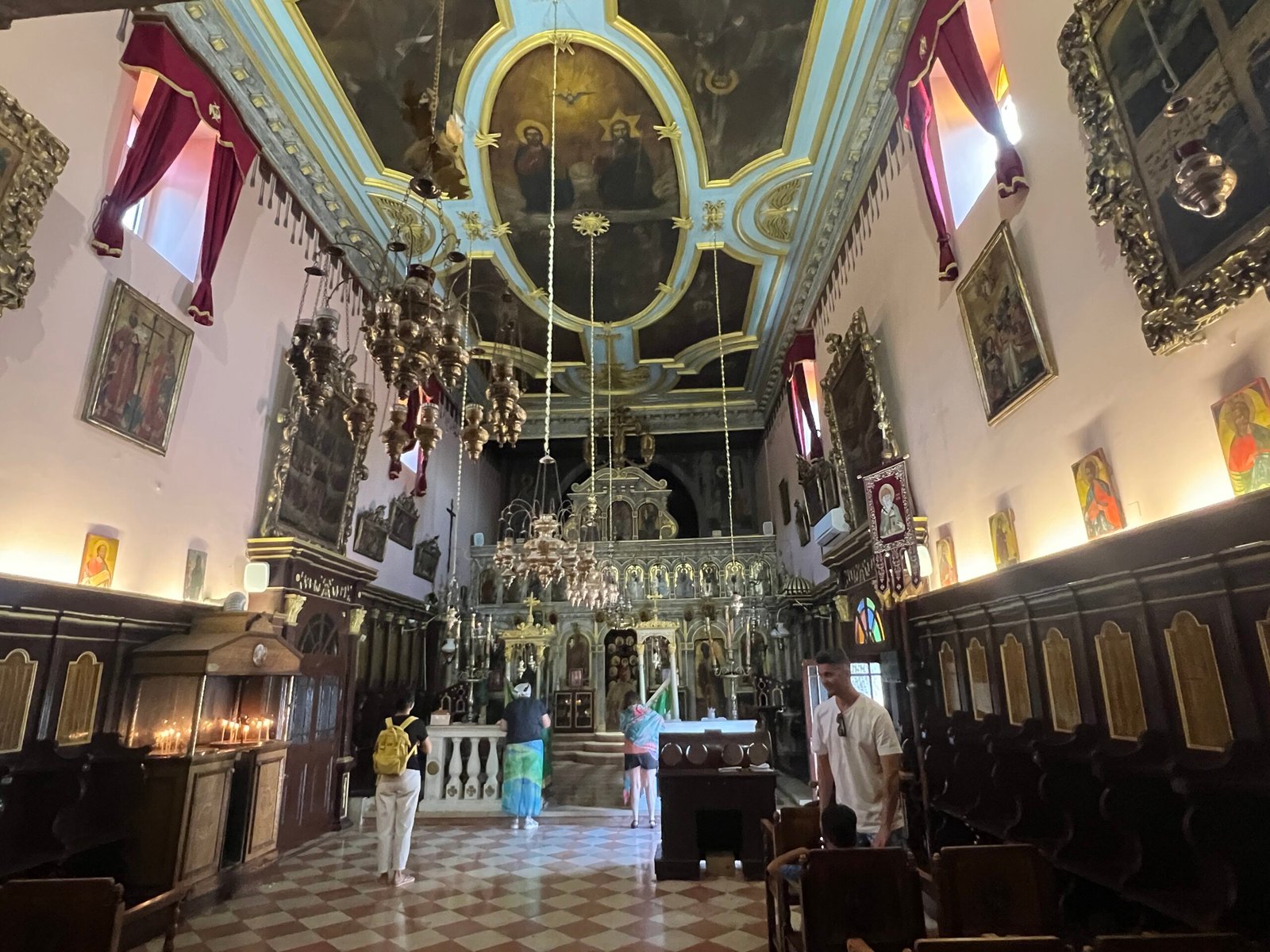
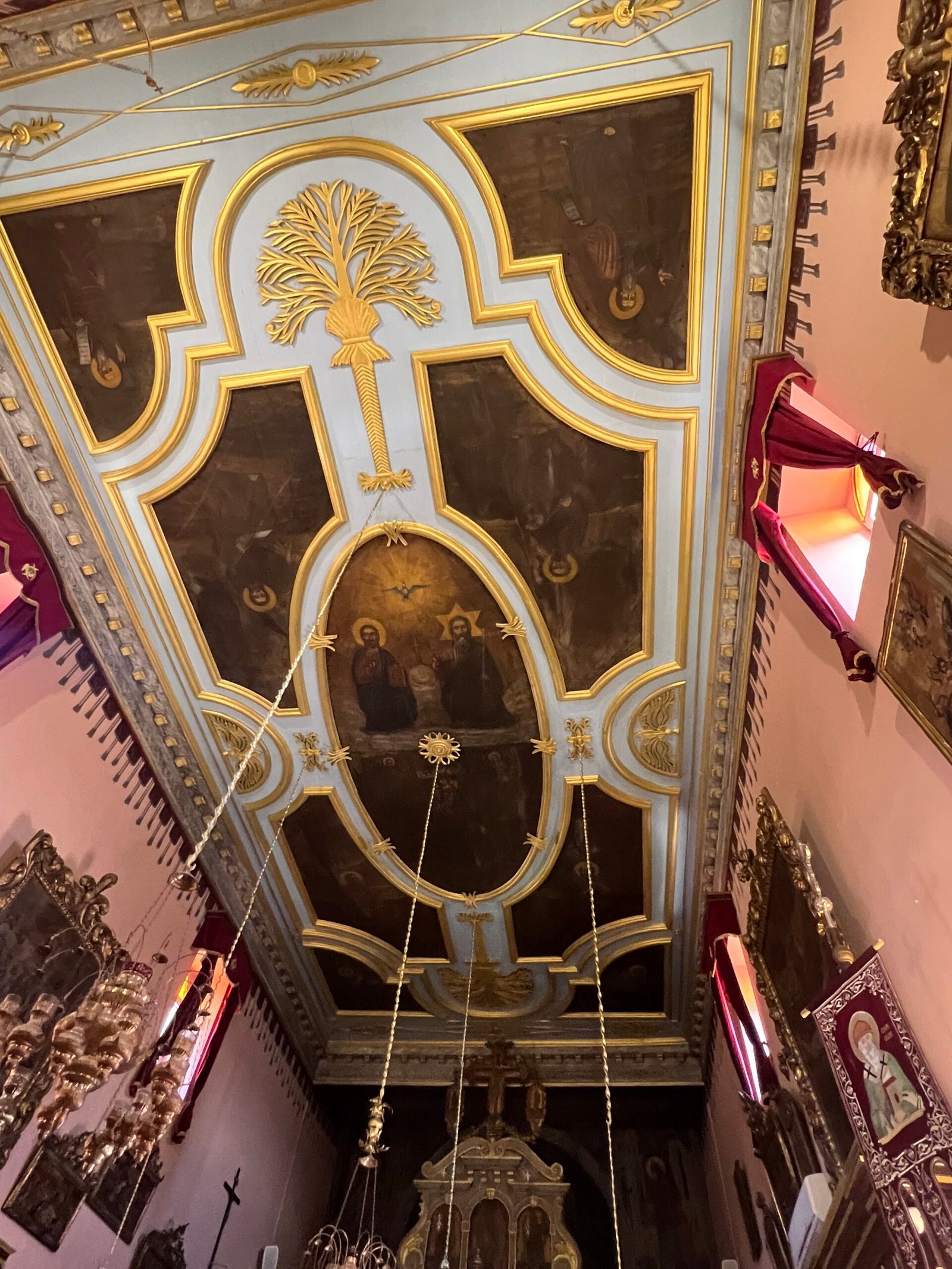
Inside, the setting changes. The photograph looking down the church shows hanging chandeliers, religious paintings, dark wooden seating and the richly decorated screen at the far end. The painted ceiling draws the eye upwards, with blue, white and gold framing the scenes above.
Leave a moment to take in the whole room before focusing on a single detail. The wider view shows how the ceiling, lighting and furnishings work together; a closer view of the painting reveals things that would be lost in a quick doorway photograph.
A wide view of the church, with visitors beneath the chandeliers.
A closer look at the painted ceiling and its decorative borders.
Keep voices low and give worshippers space. Photography rules can differ between the church and museum, so follow the signs and any instructions on the day. Our photographs document our visit; they are not a promise that photography will always be permitted in every room.
What to See in the Small Museum
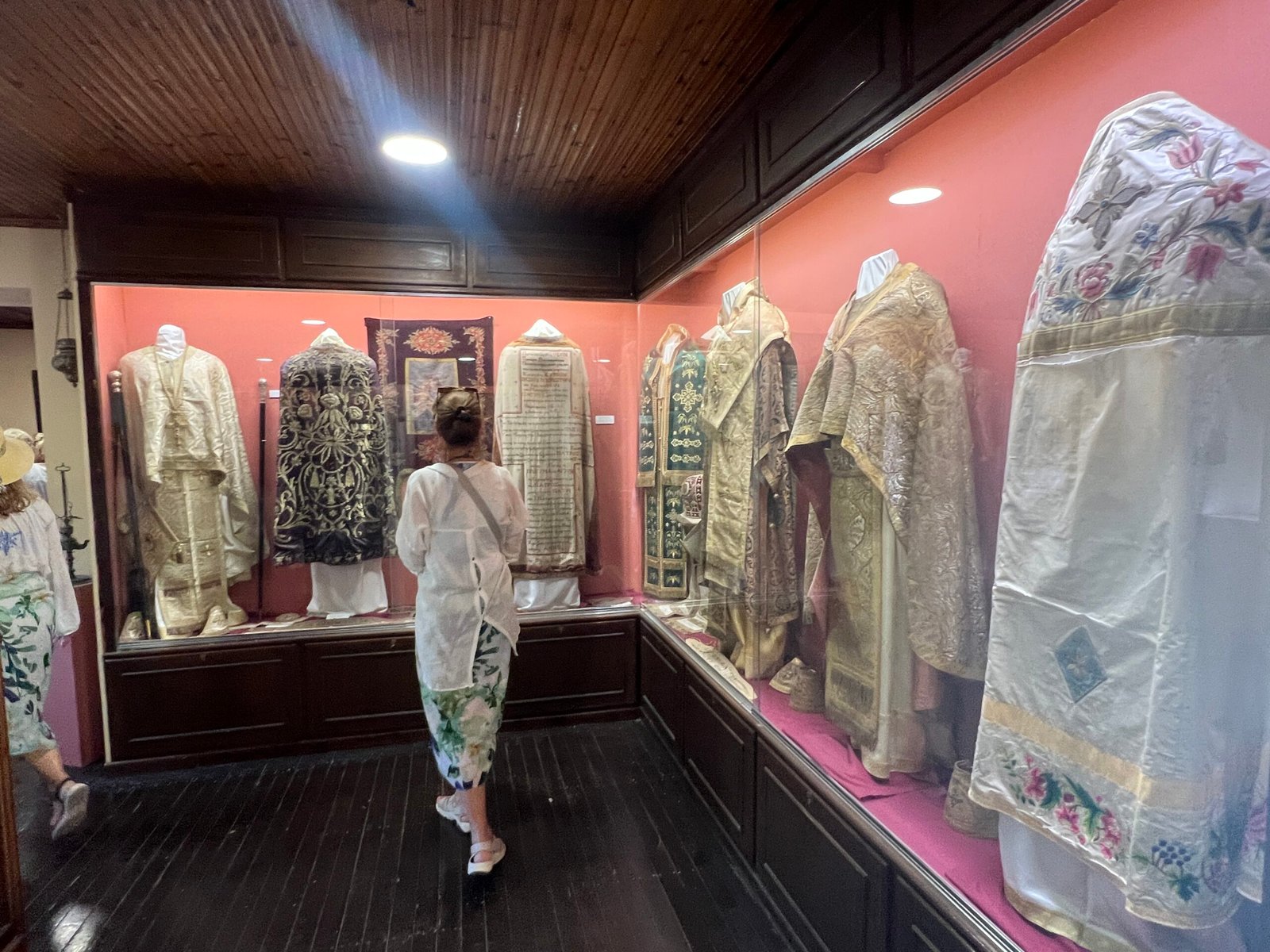
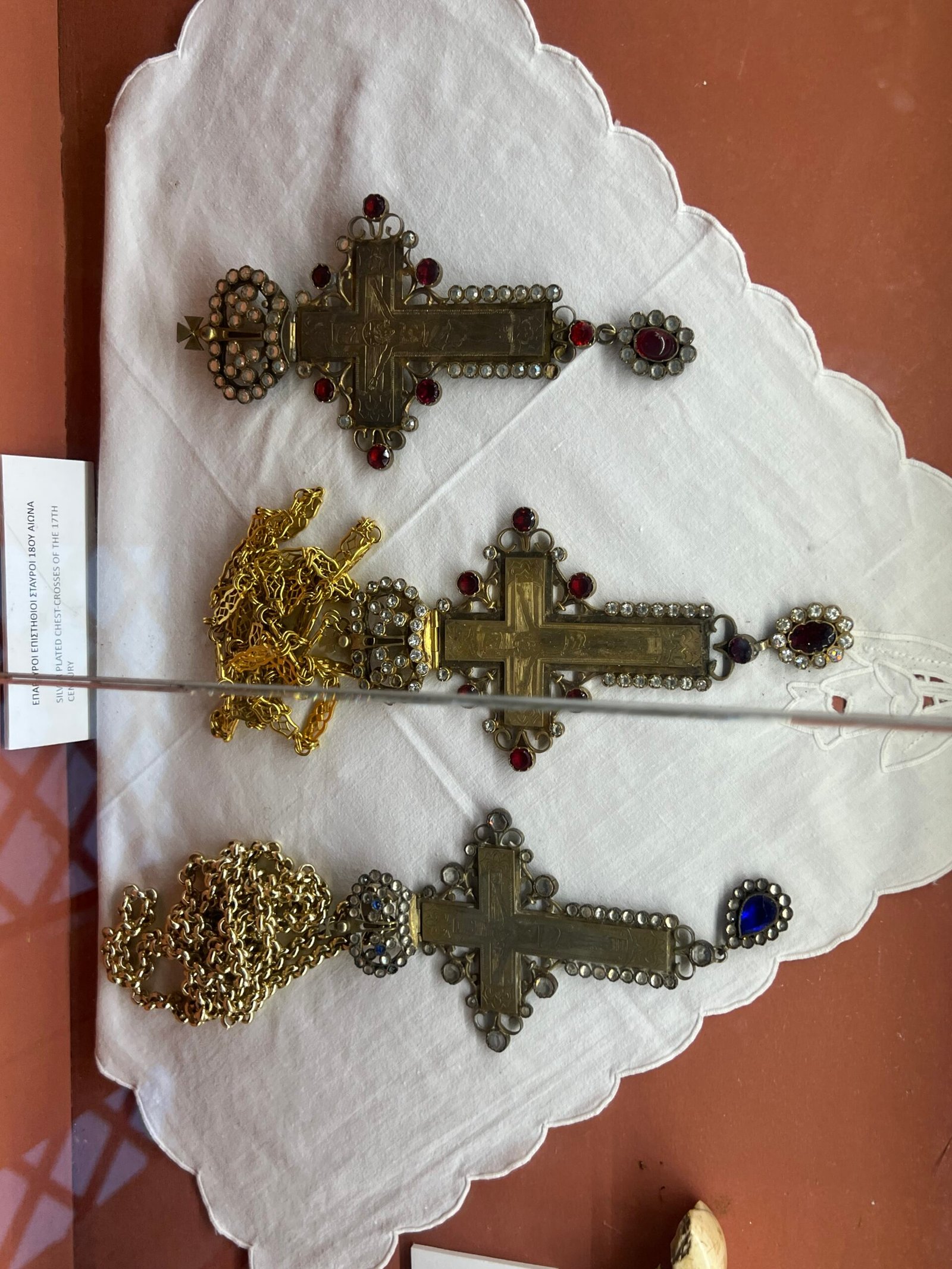
The museum gives the visit another layer. Our photographs include embroidered church vestments, decorated crosses and manuscript books displayed behind glass. These objects reward a closer look: the stitching, lettering and metalwork are easy to overlook when you move through quickly.
A visitor looking at the embroidered vestments in the museum.
The vestments also bring colour and texture into a collection that includes much older, worn pages. Look for the differences between the garments rather than treating the entire case as one object. The darker embroidered example and the pale textiles have distinct patterns.
Three decorated crosses displayed on a white cloth.
For another museum day on the island, the Archaeological Museum in Corfu Town offers a different focus: ancient sculpture and finds rather than the monastery’s religious collection.
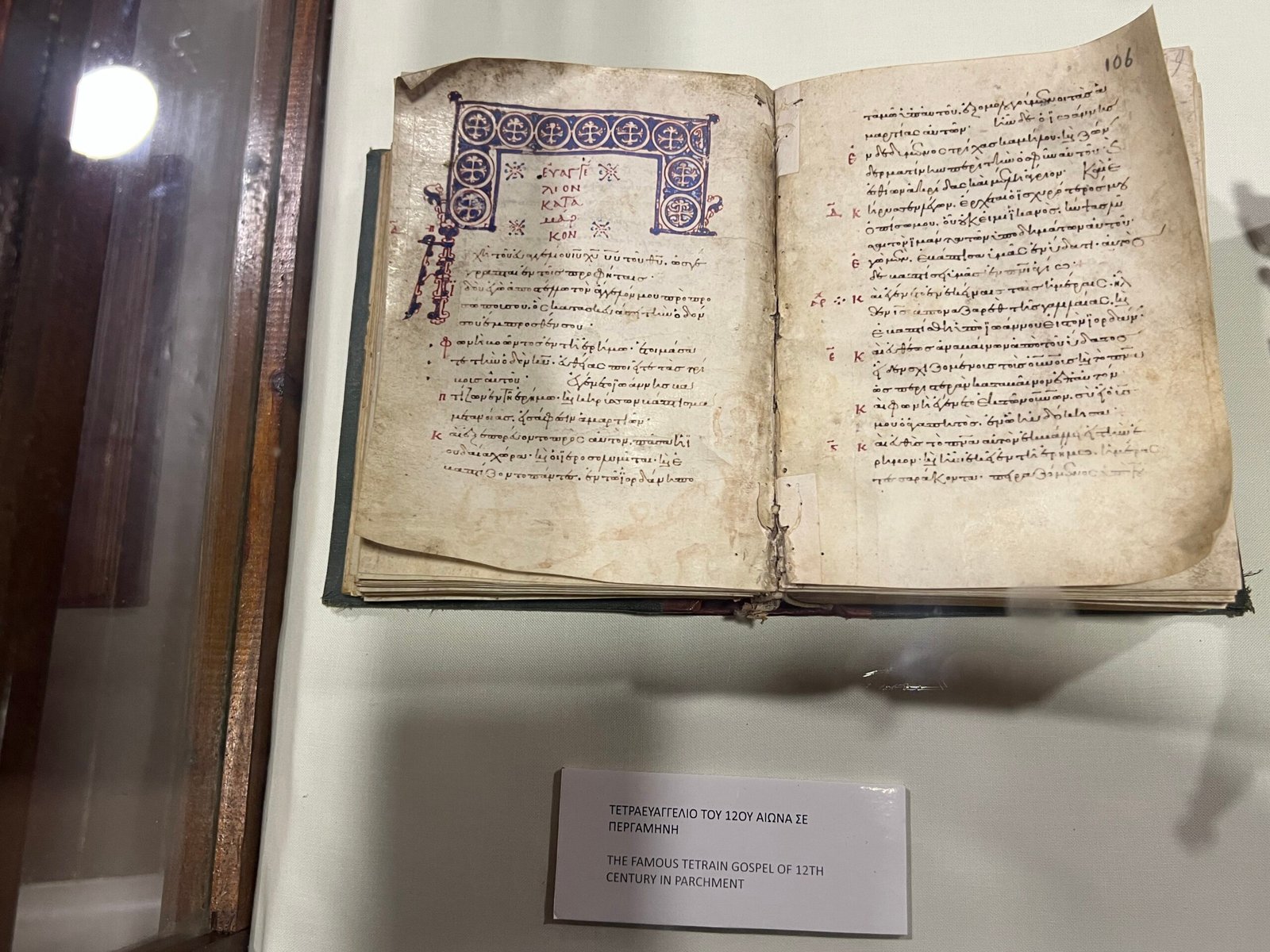
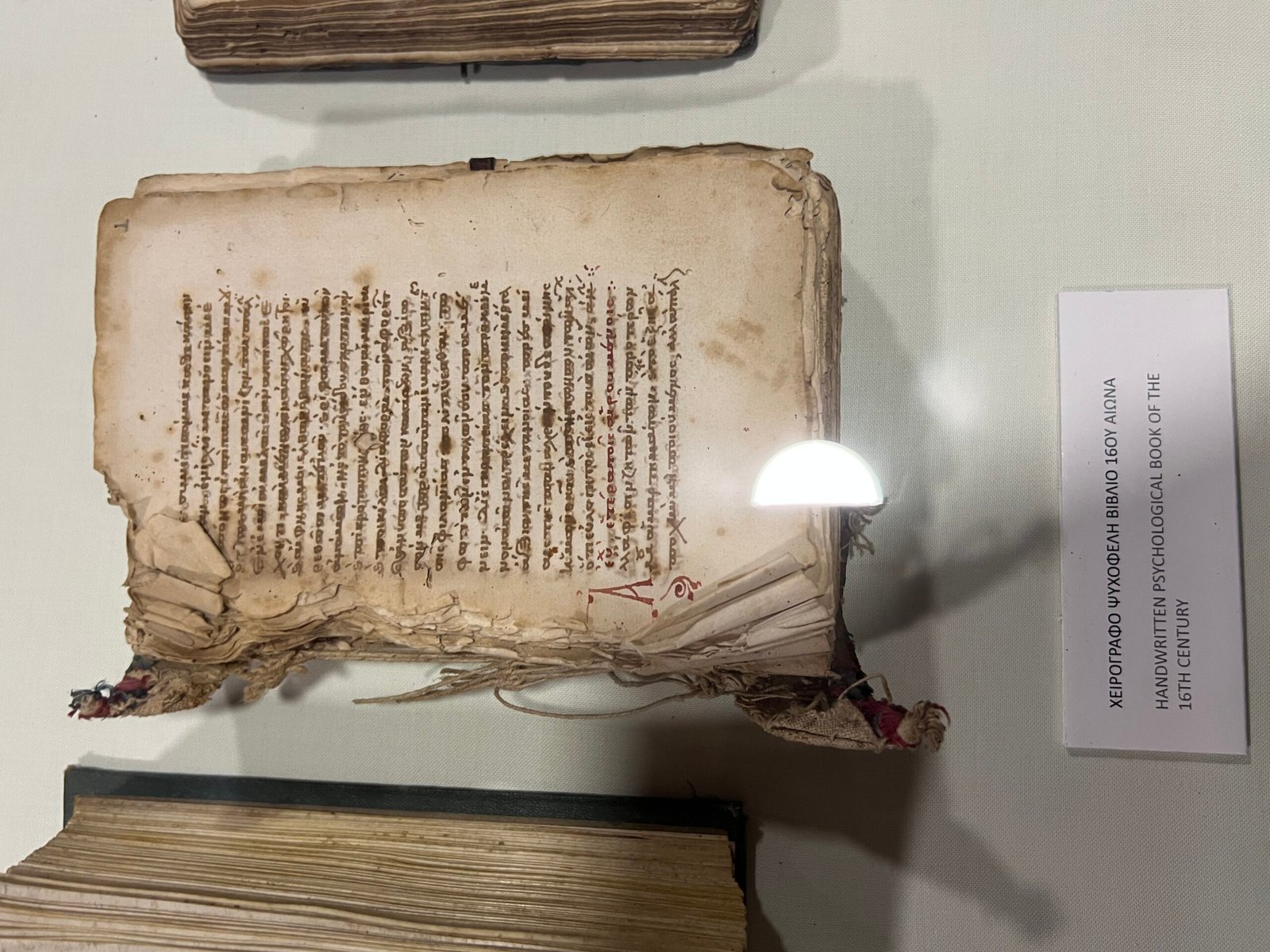
We have kept just two manuscript photographs here: the oldest clearly dated book in our photographs and a second early manuscript with striking handwritten pages. Their dates come from the museum labels visible beside them, rather than from guesses based on how old the paper looks.
The Twelfth-Century Gospel on Parchment
The label identifies this as a twelfth-century Gospel manuscript on parchment. The Greek wording refers to the four Gospels. In our photograph, an ornamental blue heading introduces the Gospel according to Mark, followed by handwritten text with red details.
This is the book to pause at if you only have time for one manuscript. The decorated opening and the closely written pages make it visually interesting even if you cannot read Greek. It is also a reminder that an object in a museum collection can be older than the institution’s traditional founding date.
The museum label dates this Gospel manuscript on parchment to the twelfth century.
The Sixteenth-Century Handwritten Book
The second selected manuscript is dated to the sixteenth century on its label. The Greek label uses the term psychophelēs, meaning beneficial to the soul. Its worn edges, handwritten lines and red initials make an interesting contrast with the elaborate opening of the older Gospel.
Look at the red letters that stand out from the dark writing, and the irregular edges of the surviving pages. Together, these two books show different styles of handwriting and decoration across several centuries.
A sixteenth-century handwritten book, dated by the museum’s display label.
Sea Views, Rocks and the Bay Below
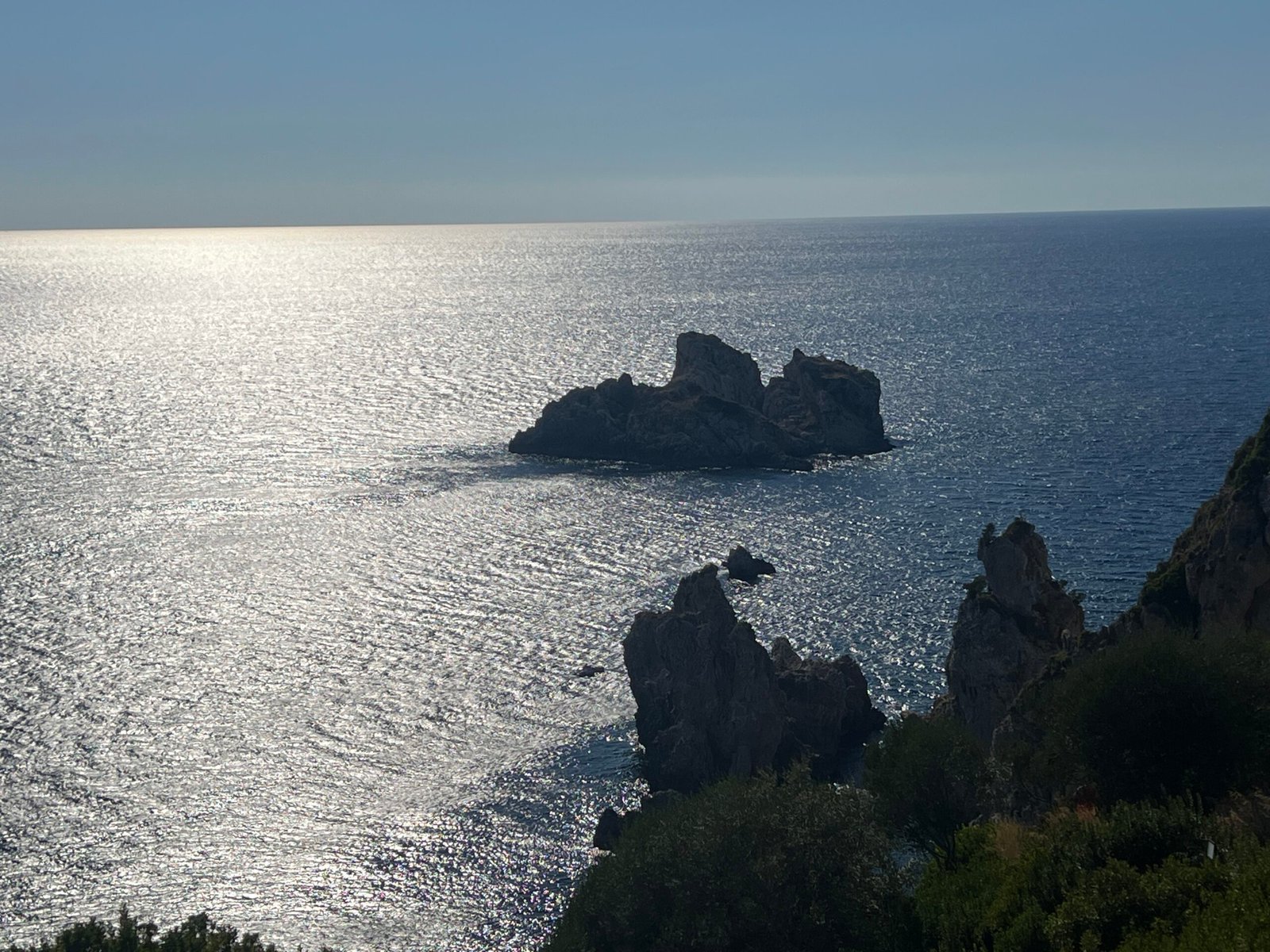
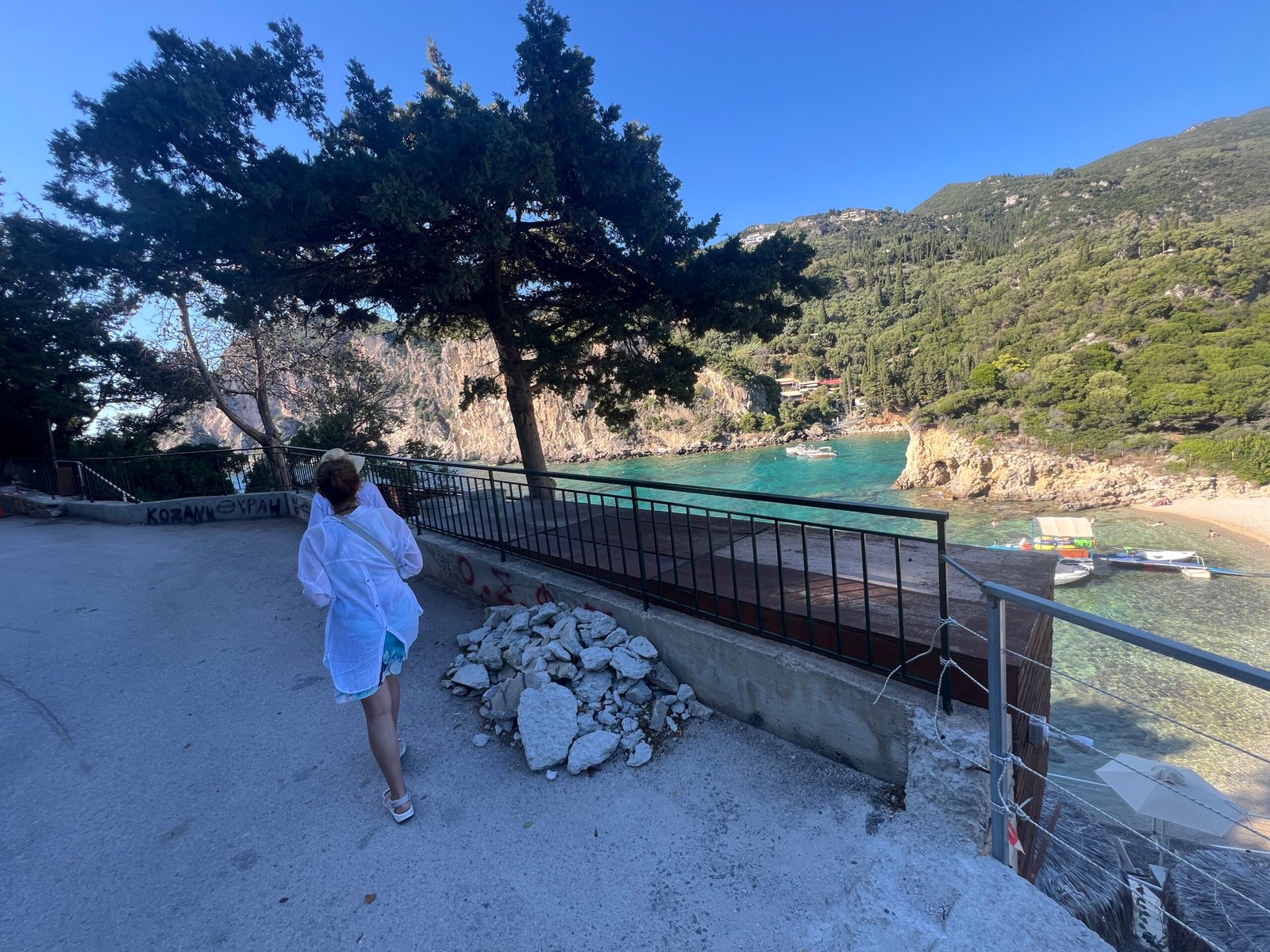
Leave time for the views after the museum. Our photographs look in more than one direction: out towards offshore rocks and open sea, and back towards the beach with buildings and green hills behind it. These are different parts of the landscape, so it is worth looking around rather than taking just one picture.
Offshore rocks and sunlight across the Ionian Sea.
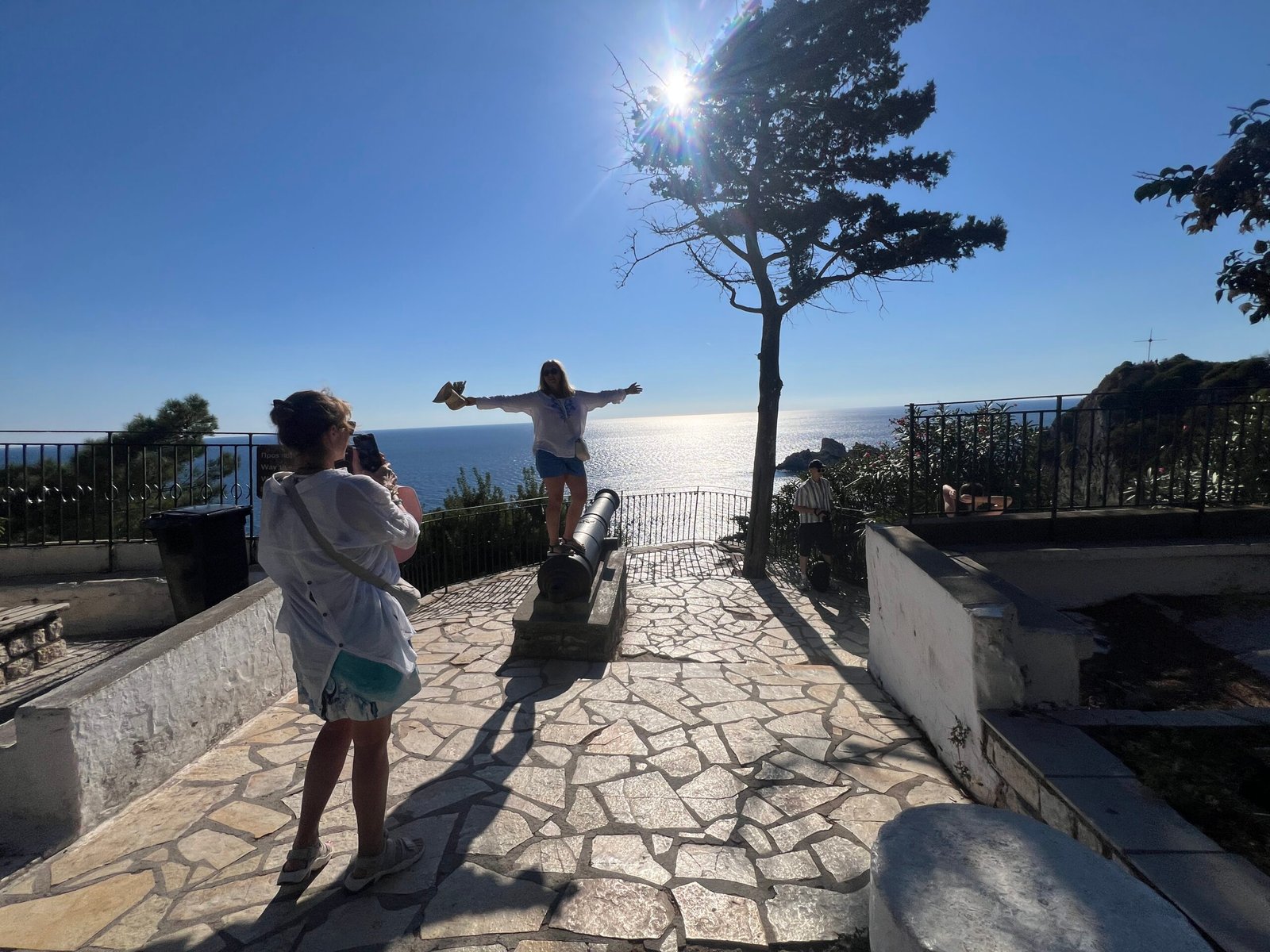
The photographs with people help show the setting too. A visitor at the railing gives scale to the terrace, while the open water behind makes it clear why people stop here for pictures. Keep to the paths and viewing areas, especially near the edges.
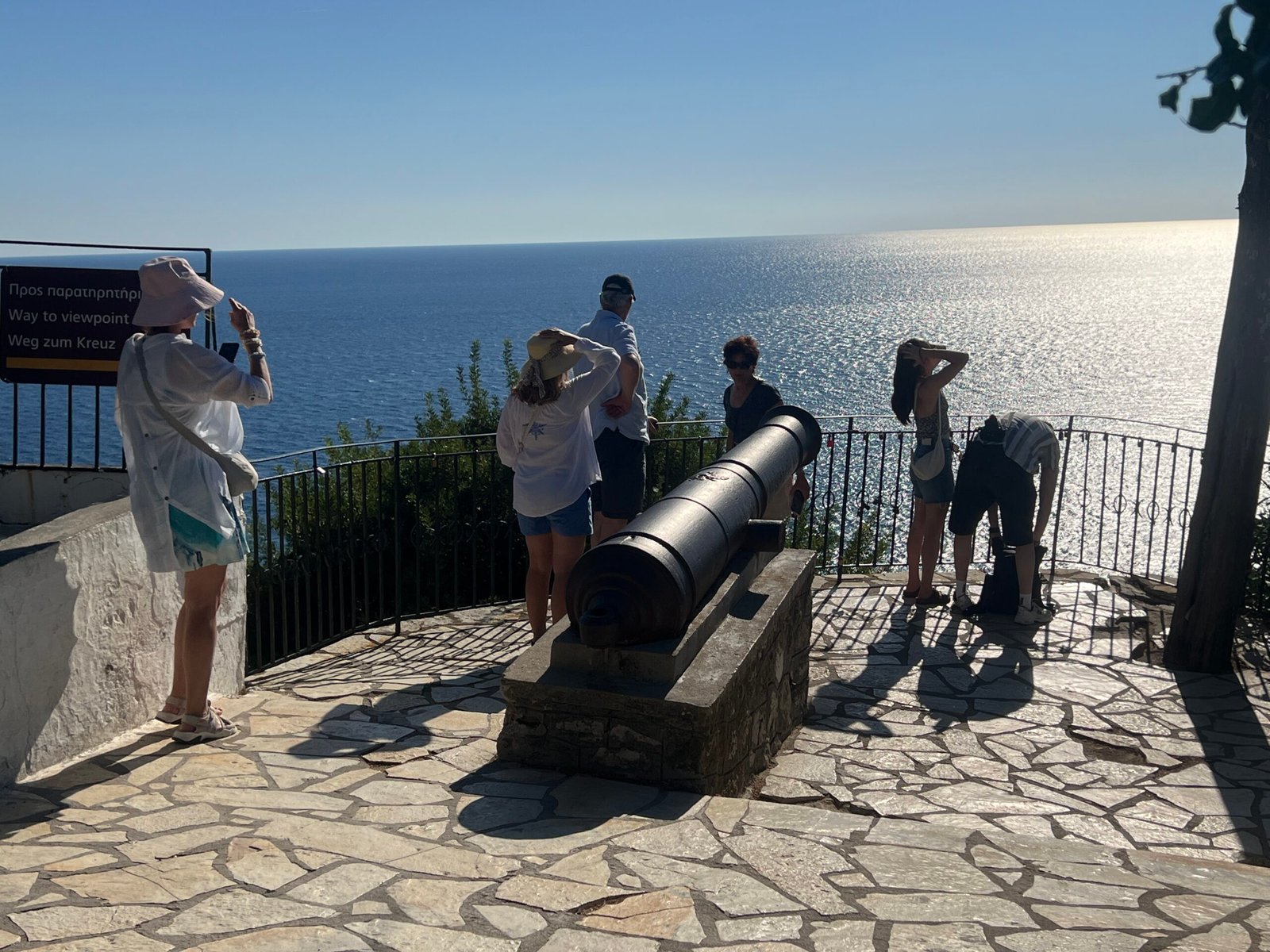
Visitors taking photographs at the sea-facing viewpoint.
The cannon beside the railing at the viewpoint.
The cannon gives this terrace another point of interest. Leave space for others to take their photographs, then look beyond the railing towards the open water. It is a good place to pause before continuing around the headland.
Visiting Hours and Dress Code
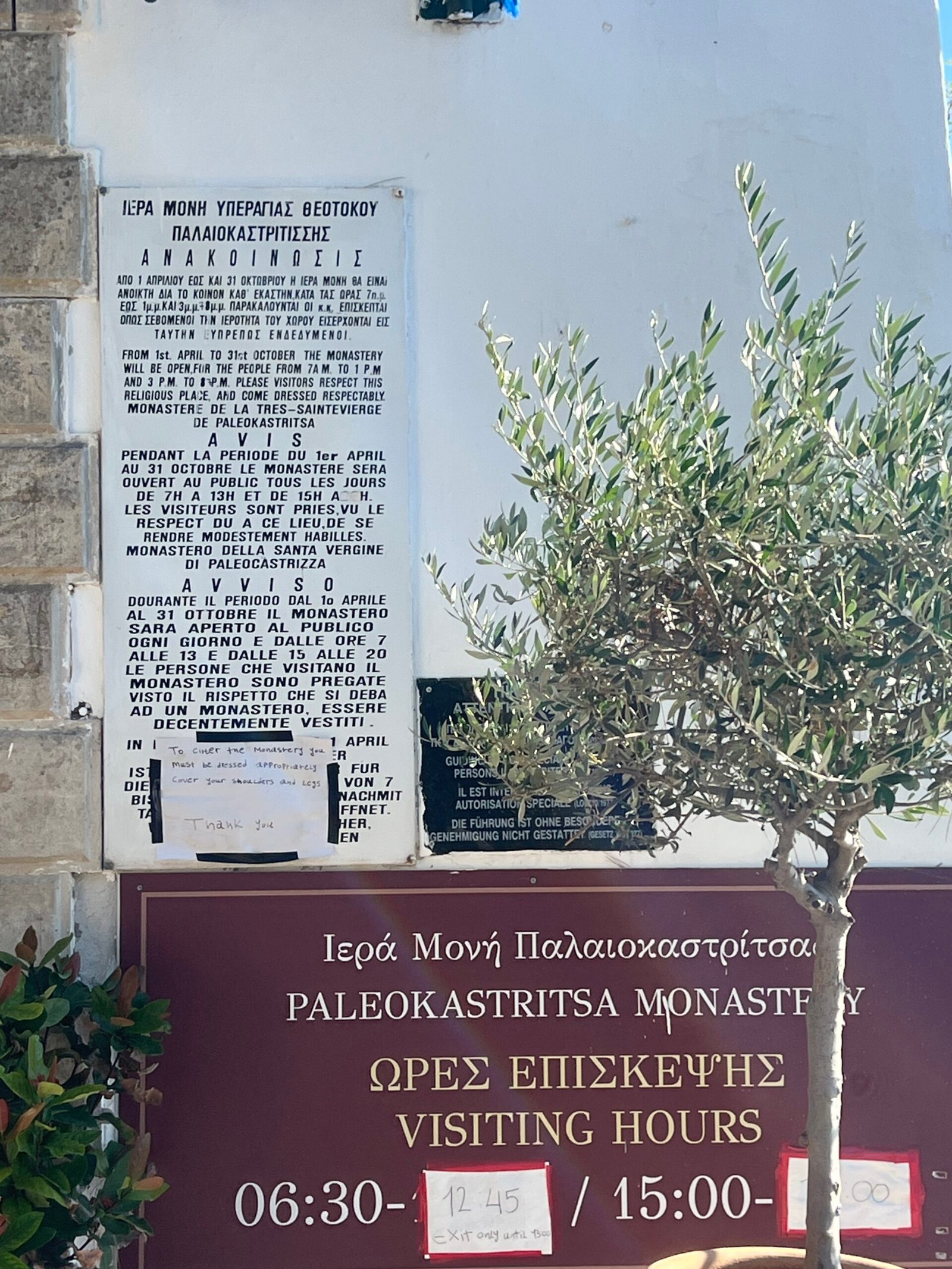
Check the current visiting hours before making a special trip. Our entrance photograph shows a seasonal notice for April to October, a separate visiting-hours board and handwritten changes. They do not form one clear, reliable timetable, so we would not use the photograph to promise a particular opening or closing time.
The entrance notices include visiting hours, handwritten changes and a dress-code reminder.
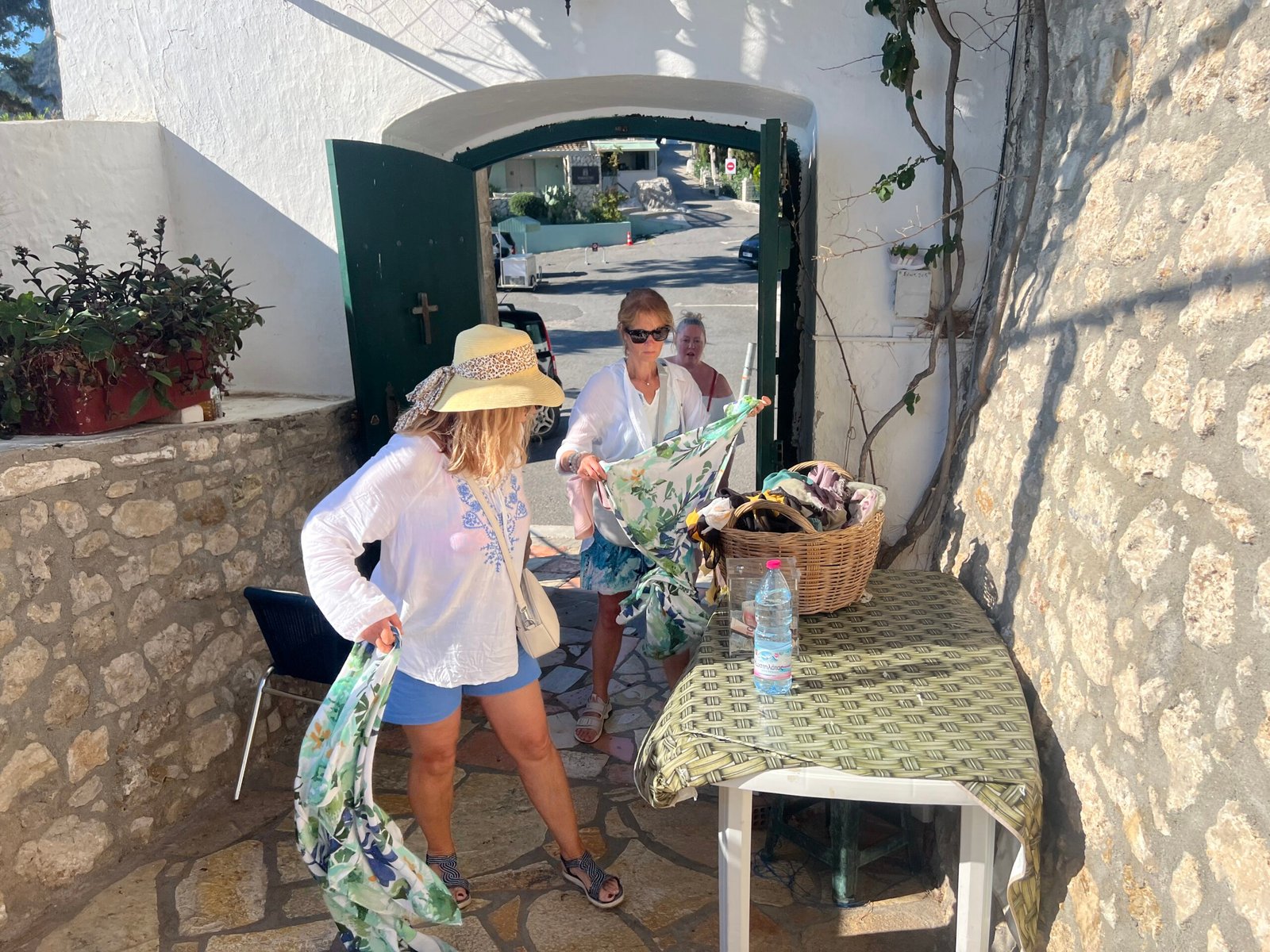
Women need to cover their legs to enter the monastery. Fabric wraps are available free of charge from the basket shown here.
The entrance notice asks visitors to cover their shoulders and legs. Women need to cover their legs; during our visit, fabric wraps were available free of charge from the basket at the entrance, as shown in our photograph. You can wrap one around your waist before going inside. Comfortable shoes are sensible for the stone paths and the uphill approach.
We have not confirmed a current admission tariff, so no fixed ticket price is quoted here. Check at the entrance for any museum charge or donation arrangement. Also leave flexibility in your schedule for services or a midday break.
On the Uphill Walk: Corfu Aquarium and the Large Car Park
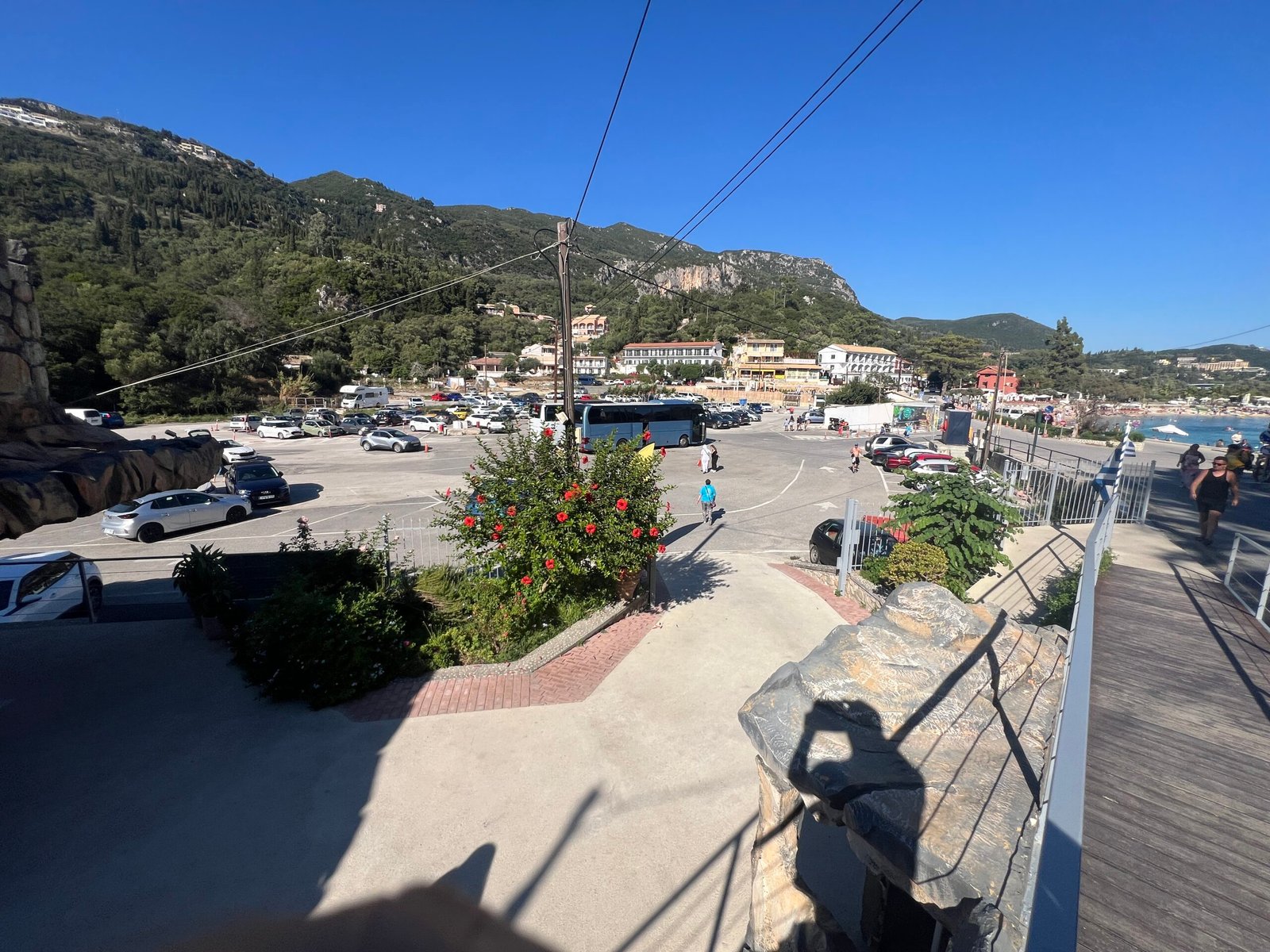
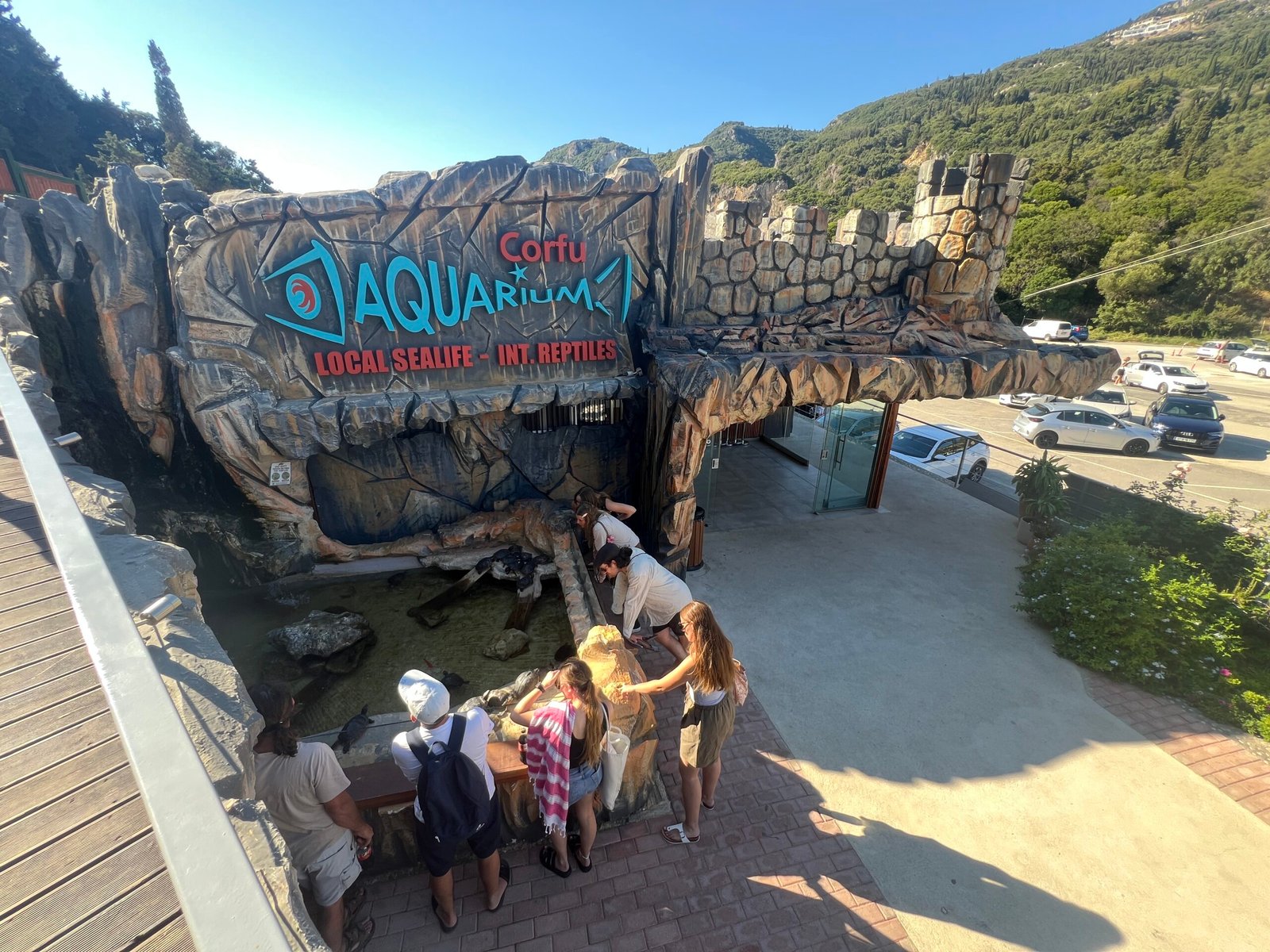
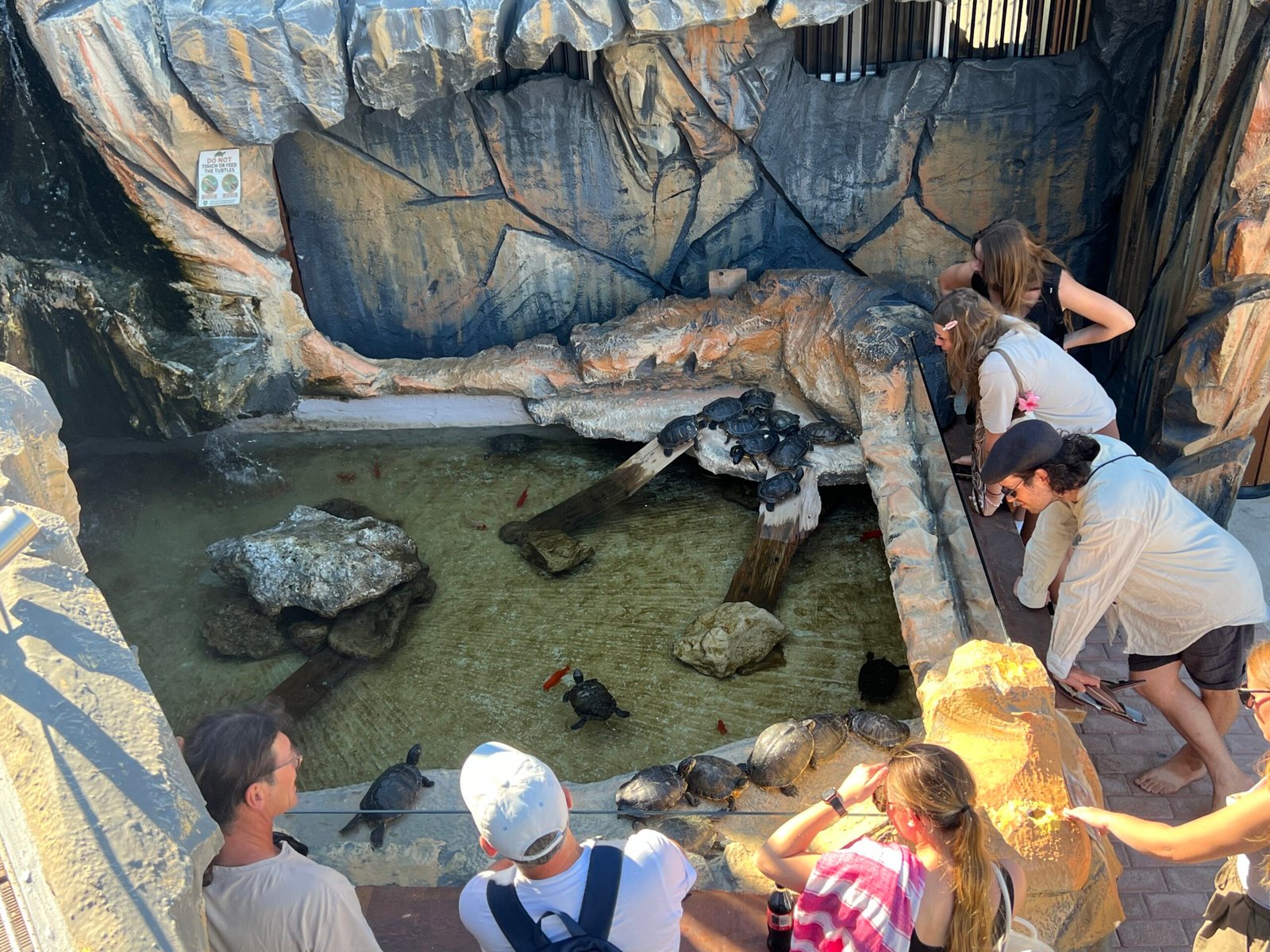
As we walked uphill from the waterfront towards Paleokastritsa Monastery, we passed Corfu Aquarium near the start of the climb. Our photographs show the aquarium entrance, its outdoor turtle pool and the large car park beside it. This is down by the beach, below the monastery, so allow for the uphill walk if you leave your car here.
The large car park beside Corfu Aquarium, seen as we started the uphill walk towards the monastery.
Corfu Aquarium near the start of the climb to Paleokastritsa Monastery.
The turtle pool caught our eye on the way up. If you would like to add an aquarium visit before or after the monastery, you can book through the aquarium’s official website. The entry ticket includes a guided tour. Check the current price and available dates before booking.
Visitors watching the turtles at Corfu Aquarium on our route uphill.
A rental car gives you flexibility to combine the monastery with time on the coast. Plan the parking and final approach before arriving, and allow extra time for traffic in the resort. Do not assume you will be able to stop directly beside the entrance.
If you are hiring a car, our Corfu article explains our own rental experience and what we checked before collecting it.
You can also compare car-hire options on DiscoverCars. Compare the total cost, deposit, collection point and cover terms, rather than choosing only from the headline daily price.
For a trip without arranging the driving, the GetYourGuide activity “Corfu: Palaiokastritsa, Lakones & Kratsalo with Shore Option” currently describes a monastery visit as part of its west-coast outing. It also combines time in Paleokastritsa with stops in Lakones and at Kratsalo.
The listing offers an optional boat trip separately. Check the selected option, meeting point and current itinerary before booking, particularly if you are arriving on a cruise ship. This is a wider coastal excursion, rather than a ticket solely for the monastery.
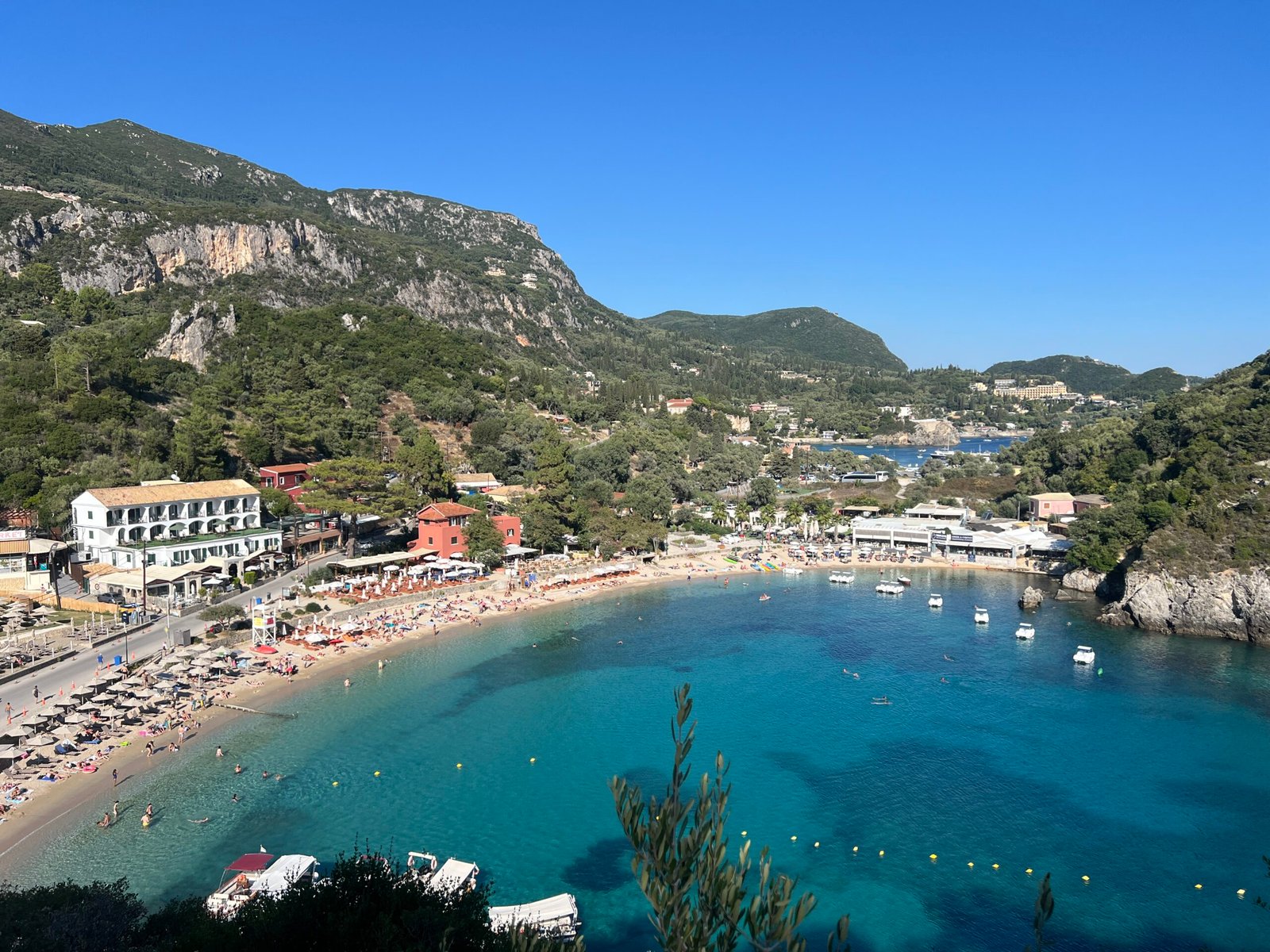
The beach below makes an easy second part of the outing, provided you leave enough time. Visit the monastery in suitable clothes, then change for the beach afterwards. That avoids carrying the expectation of a swimming stop into a religious building.
The beach, blue bay and green hills below Paleokastritsa Monastery.
A walk beside the bay, with the beach and wooded slopes beyond.
Our suggested plan is simple: explore the courtyard, church and museum, stop at the viewpoints, then continue down towards the waterfront. Add food or swimming according to your interests. If you also want a boat trip, check its departure time before deciding the order of the day.
Is Paleokastritsa Monastery Worth Visiting?
We would include it in a Paleokastritsa outing for the combination of architecture, religious objects and coastal scenery. The manuscripts give you something specific to look for inside, while the views provide a reason to spend time outside. It suits visitors who enjoy both cultural stops and photographs of the landscape.
What works well
A varied visit: courtyard, church, small museum and viewpoints.
Clearly dated manuscripts provide memorable museum highlights.
The surrounding beach and hills make a natural extension to the outing.
What to plan around
Religious etiquette and clothing requirements apply.
Steps, stone paving and the uphill approach may affect accessibility.
Visiting hours need checking, especially around midday.
Frequently Asked Questions
Is Paleokastritsa Monastery the same as the Monastery of the Theotokos?
Yes. The names refer to the monastery dedicated to the Virgin Mary above Paleokastritsa. The resort’s spelling also varies between Paleokastritsa and Palaiokastritsa.
How much time should we allow?
We suggest 45–75 minutes for the monastery, museum and viewpoints. This is a planning estimate, not a record of our exact visit length. Add separate time for the beach, food or a boat trip.
What should visitors wear?
The entrance notice asks visitors to cover shoulders and legs. Women can cover their legs with one of the fabric wraps provided free of charge in the basket at the entrance during our visit.
Which books are shown in this guide?
A twelfth-century Gospel manuscript on parchment and a sixteenth-century handwritten book. Both dates are visible on the museum labels in our photographs.
Can we visit without renting a car?
Yes. The linked GetYourGuide west-coast excursion currently includes a monastery visit. Check the available option and meeting point before reserving.
Is the whole site accessible without steps?
We would not promise step-free access. Our photographs show steps and uneven stone paving. If these present a difficulty, confirm the route and access to the church and museum before travelling.
Is it only worth visiting for the view?
No. The coastal setting is a major attraction, but the church decoration, vestments, crosses and old manuscripts add several reasons to explore beyond the viewpoint.
Guide prepared on 4 October 2026. Historical background checked against Corfu Port Authority; excursion details checked against the GetYourGuide listing. Manuscript dates and entrance instructions are taken from the labels and notices in our own photographs. Hours, admission arrangements and excursion itineraries can change.